A well-maintained portable generator is commonly estimated at 1,000-3,000 engine-hours, or roughly 10-25 years of typical part-time use. Home standby generators are commonly estimated around 3,000 running hours for air-cooled models, while maintained standby units often serve 25-30 years in normal backup duty.
Generator makers do not publish a total service-life number. What they do publish are warranty terms and maintenance schedules; the longer-life figures come from installer and industry estimates, plus the simple math of how many hours the machine actually runs.
Hours, not years, is the real unit
A generator wears by engine-hours, not by calendar years. A portable generator that sits clean, dry, and exercised can age slowly; the same model that runs overloaded, sits with stale fuel, and skips oil changes can be finished early.
Here’s the arithmetic. A portable used 100 hours a year — a storm week plus weekend use — reaches a 1,500-hour ballpark in about 15 years. At the upper 3,000-hour estimate, that same use pattern stretches to about 30 years, assuming the engine, alternator, fuel system, and storage habits all hold up.
Standby units look different because they run regularly but not constantly. Weekly exercise adds about 26 hours per year, and a 3-day outage adds about 72 hours. That’s still under 100 hours per year, which is why the 25-30-year standby figure is plausible in normal backup service.
| Usage pattern | Hours per year | Years at 1,500 hours | Years at 3,000 hours |
|---|---|---|---|
| Portable: storm week plus weekends | 100 | 15 | 30 |
| Standby: weekly exercise only | About 26 | About 57 | About 115 |
| Standby: weekly exercise plus a 3-day outage | Under 100 | More than 15 | More than 30 |
That table also shows why “years” can mislead you. A contractor running a portable hard can burn through hours fast, while a homeowner using backup power only during outages may own the same generator for decades.
Portable generator lifespan

Installer and industry estimates commonly put portable generators at 1,000-3,000 engine-hours, depending on engine quality, load, storage, and maintenance. That’s an estimate, not a factory promise. No portable generator maker publishes a total-life rating that says the unit will die at a specific hour count.
Budget portable generators usually have less margin for abuse. If they run hot, run low on oil, sit with untreated gasoline, or live outside under a bad cover, they can miss the low end of that estimate. Premium inverter generators tend to earn their reputation through better engine manners, cleaner packaging, quieter operation, and stronger support, but they still need oil, clean fuel, and correct loading.
The biggest mistake is shopping only by starting watts. Starting watts help start motors; they don’t tell you how long the engine, carburetor, inverter module, alternator, frame, or controls will last. If you’re still deciding between a portable and a permanently installed unit, our portable vs standby generator guide breaks down the ownership tradeoffs.
For a homeowner, the practical answer is this: a portable generator can absolutely last a long time if it’s used part-time and maintained on schedule. A portable used 100 hours a year has a lot of calendar life available before it reaches even a midrange 1,500-hour estimate.
Standby generator lifespan
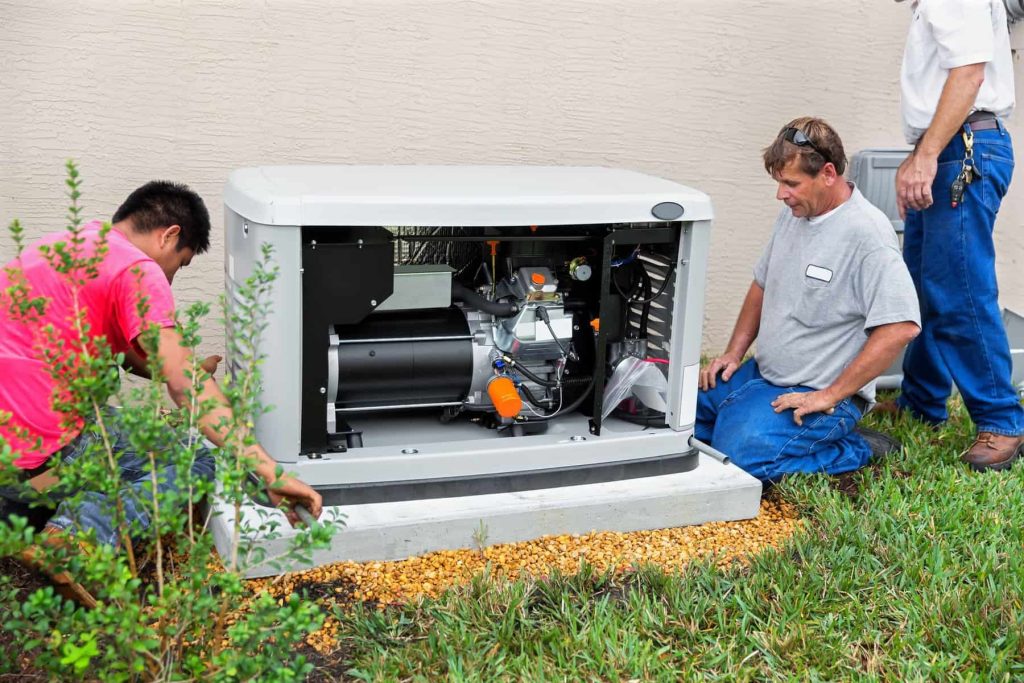
Air-cooled home standby generators are commonly estimated by installer and industry sources at around 3,000 running hours of design life. Liquid-cooled standby units are commonly estimated much higher, at 10,000-30,000 hours. Those figures are not manufacturer-published death dates; they’re planning numbers used around installation, service, and replacement discussions.
The calendar-life story is better for most homes because standby units don’t run many hours in normal backup duty. Weekly exercise is about 26 hours per year. Add a 3-day outage at about 72 hours, and the year is still under 100 running hours.
That usage pattern supports the common 25-30-year estimate for a maintained home standby generator in normal backup service. The key phrase is “normal backup service.” A standby unit that runs through long, repeated outages or carries an oversized load will use up hours faster.
Standby ownership also includes installation cost, service access, fuel supply, transfer equipment, and eventual replacement planning. If you’re comparing long-term ownership numbers, start with our generator cost guide before you price the unit alone.
What the warranties actually promise
Warranties are hard facts; lifespan estimates are not. A warranty tells you how long the manufacturer is willing to cover qualifying defects under its published terms. It does not say the generator will only last that long, and it does not guarantee a total number of running hours.
Here are the published warranty terms from current manufacturer information in this rebuild set:
| Generator or brand | Published warranty term | What it means |
|---|---|---|
| Honda EU-series residential warranty | 3 years | Hard coverage term, not a total-life rating |
| Champion portable generators | 3 years | Hard coverage term, not a total-life rating |
| Westinghouse portable generators | 3 years | Hard coverage term, not a total-life rating |
| Generac Guardian home standby | 5 years | Hard coverage term, not a total-life rating |
| Briggs & Stratton Q6500 | 2 years | Hard coverage term, not a total-life rating |
| Pulsar base coverage | 1-2 years | Depends on purchase date and registration |
A longer warranty can be a confidence signal, but don’t confuse it with service life. A 3-year portable warranty and a 5-year standby warranty can both sit beside a much longer real-world ownership life if the generator is maintained and used correctly.
The six things that kill generators early
Stale fuel and gummed carburetors
Honda’s fuel guidance says untreated gasoline can degrade in about 30 days. STA-BIL claims treated gasoline can stay protected for up to 24 months. The practical takeaway is simple: don’t leave old gas sitting in a carbureted portable generator and expect an easy start after storage.
Stale fuel varnishes small passages and leaves you with surging, hard starting, or no start at all. On portables with a fuel shutoff, running the carburetor dry before storage is one of the cheapest life extenders you have.
Running out of oil
Low-oil shutdown helps protect the engine, but it isn’t a maintenance plan. If the generator is operating on a slope, burning oil, or ignored between service intervals, damage can happen before the owner realizes there’s a problem.
Oil is the buffer between heat, metal, and load. Missed oil changes shorten the life of an otherwise good engine faster than most owners expect.
Chronic overloading
A generator can handle a short starting surge within its rating, but living at the edge is different. Chronic overloading makes the engine work harder, increases heat, and can stress electrical parts.
Use running watts as your real planning number, not just the bigger starting-watt number on the box. If the generator is constantly screaming, tripping, or bogging down, the load plan is wrong.
Storing it wet
Water exposure is rough on frames, fasteners, outlets, switches, and windings. A generator that gets stored wet can corrode even if the engine still has low hours.
Let it cool, dry it, and store it under proper cover in a dry place. A weather cover is not the same as letting a portable live outside through every storm season.
Skipping exercise runs
Generators hate neglect. Exercise runs move fuel, oil, seals, and electrical parts often enough to reveal small problems before a real outage.
Standby units commonly handle exercise automatically. Portable owners need to build the habit themselves, especially before storm season and cold weather.
Weather exposure
Heat, rain, snow, and dirty storage all shorten generator life. Portable generators should never be run indoors, but they also shouldn’t be abandoned outside between uses.
Standby generators are built for outdoor installation, but they still need clearance, airflow, clean panels, and service. A buried, neglected standby cabinet won’t age like a maintained one.
How to reach the high end
The path to the high end of the lifespan range is boring, which is good news. Use fresh fuel, avoid overloads, store the machine dry, change oil on the manufacturer’s schedule, and run it often enough to know it works.
Published maintenance schedules vary by brand. Champion calls for the first oil change at 5 hours, then every 50 hours or each season. Honda calls for oil at 20 hours, then every 100 hours or 6 months. Generac lists 20-30 hours for the first service, then every 100 hours or annually.
That’s a wide spread. Intervals differ up to 4x by brand, so the manual wins. Our portable generator maintenance guide walks through the owner tasks that keep a small engine alive instead of turning it into a carburetor job.
Storage deserves its own plan. For portable generators, shut off the fuel valve and run the carburetor dry when the manual allows it, or stabilize fuel before storage. Our generator winterizing guide covers the storage steps that matter before long idle periods.
Oil choice matters too, but the right answer depends on the engine and temperature range listed in your manual. If you’re not sure what to pour in, use our generator oil guide as a starting point, then verify against the manufacturer chart.
Exercise the generator monthly if it isn’t already on an automatic standby schedule. You’re not trying to rack up hours; you’re trying to catch weak batteries, fuel problems, leaks, and starting issues before the lights go out.
Three long-haul picks
Check the Honda EU2200i price on Amazon →
Honda EU2200i: The EU2200i remains the benchmark small inverter generator for owners who care more about long service life than the cheapest sticker price. Per Honda’s published figures, it’s rated at 2,200 starting watts and 1,800 running watts, with a listed noise range of 48-57 dBA and a 3-year residential warranty. One honest update: this page used to recommend the Honda EU3000iS, but that model is discontinued; the successor is the EU3200i, covered in our Honda EU3200i review.
Check the Westinghouse iGen4500 price on Amazon →
Westinghouse iGen4500: The iGen4500 is a larger inverter option for RV owners and homeowners who need more output than a small suitcase generator. Westinghouse’s published figures list 4,500 starting watts, 3,700 running watts, and 52 dBA. Its 3-year portable warranty puts it in the same published coverage class as several well-known portable brands.
Check the Briggs & Stratton Q6500 price on Amazon →
Briggs & Stratton Q6500: The Q6500 fits owners who want higher portable output in a quieter package than many open-frame jobsite-style machines. Briggs & Stratton’s published figures list 6,500 starting watts, 5,000 running watts, a 306cc engine, and 66 dBA. Its published warranty is 2 years, so view it as a capable high-output portable rather than proof of a specific service-life total.
Bottom line
Plan on 1,000-3,000 hours for a well-maintained portable generator, with many homeowners seeing roughly 10-25 years because they use it part-time. For standby generators, use about 3,000 hours as the common air-cooled estimate, with maintained home standby units often serving 25-30 years in normal backup duty.
The machine that lasts is the one with clean oil, fresh fuel, dry storage, correct loading, and regular exercise. Don’t buy on wattage alone; buy the right class of generator, then maintain it like an engine you expect to need during the next outage.
Frequently asked questions
How many hours does a portable generator last?
Installer and industry estimates commonly put portable generators at 1,000-3,000 engine-hours, depending on engine quality, load, fuel care, storage, and maintenance. Manufacturers do not publish a total service-life number, so treat that range as a planning estimate, not a guarantee.
How long do Generac standby generators last?
Air-cooled home standby generators are commonly estimated around 3,000 running hours by installer and industry sources. Generac’s published Guardian home standby warranty is 5 years, but that warranty is not a total-life rating. In normal backup duty, a maintained home standby is commonly estimated to serve 25-30 years.
Can a generator last 20 years?
Yes, a generator can last 20 years if it is used part-time and maintained well. A portable used 100 hours per year reaches 1,500 hours in about 15 years and 3,000 hours in about 30 years. Storage, oil changes, fuel quality, and loading decide whether it gets there.
How often should I run my generator?
Run a portable generator monthly if it is not already on an automatic exercise schedule. Standby generators commonly exercise weekly, which adds about 26 hours per year. Exercise runs help catch weak batteries, stale fuel issues, leaks, and starting problems before an outage.
Does stale gas ruin a generator?
Stale gas can gum up the fuel system and carburetor, causing hard starts, surging, or no start. Honda’s guidance says untreated gasoline can degrade in about 30 days. STA-BIL claims treated gasoline can stay protected for up to 24 months.
Portable vs standby — which lasts longer?
In hour terms, standby units usually have the higher ceiling, especially liquid-cooled models, which are commonly estimated at 10,000-30,000 hours. Portable generators are commonly estimated at 1,000-3,000 hours. In calendar years, both can last a long time because most homeowners use them only part-time.
When should I replace instead of repair?
Replace when the generator has major engine or electrical damage, repeated fuel-system problems, heavy corrosion, chronic overload history, or poor parts support. Also consider replacement if the unit no longer covers your real running-watt needs. A clean, maintained generator with a simple service issue is usually a better repair candidate than a neglected one with multiple failures.