Honda is still the benchmark generator brand for reliability, Generac is the clear pick for home standby, and Westinghouse plus Champion are the best value-muscle brands for most portable buyers. WEN is the budget inverter brand to beat, but the honest answer is that “best generator brand” depends on the job you’re hiring it for.
If you want quiet camping power, don’t shop the same way you would for a whole-house automatic standby unit. Brand matters most through spec honesty, warranty support, and whether parts will still be available years from now.

Generator brands compared at a glance
| Brand | Known for | Example current model | Typical warranty | Where it’s strong |
|---|---|---|---|---|
| Honda | Reliability benchmark and premium inverters | EU2200i | Model-specific; dealer-backed | Quiet inverters, dealer support, long-term ownership |
| Generac | Home standby systems and GP portables | Guardian 22kW | 5-year limited warranty on the Guardian example, per Generac | Automatic home backup |
| Westinghouse | Aggressive watts per dollar | WGen9500DF | 3-year warranty | Dual-fuel portables and high-output home backup |
| Champion | Wide value lineup and broad retail availability | 200988 open-frame inverter | 3-year warranty plus lifetime tech support | RV, jobsite, and homeowner portable power |
| Briggs & Stratton | Legacy small-engine name and value inverters | P2400 PowerSmart | Verify by model | Parts familiarity and practical inverter options |
| DuroMax | Big dual-fuel and tri-fuel open frames | XP12000EH | 3-year warranty | Budget whole-home-capable portable setups |
| WEN | Budget-value inverters with honest specs | 56203i | Verify by model | Low-cost camping and emergency inverter power |
| Pulsar | Budget imports with high-output dual-fuel options | G12KBN | Verify by model | Value-first backup watts |
| A-iPower | Entry-level inverters through big-box channels | SUA2300i | Verify by model | Cheap small inverter power |
| GENMAX | Large dual-fuel inverters at aggressive specs | GM9000iED | Verify by model | Quiet big-watts niche |
| DeWalt | Licensed generator name at retail | DXGNR4000 | Verify by model | Home Depot buyers and DeWalt-brand shoppers |
| Yamaha | Former premium EF-series inverters | EF-series end-of-line units | Ask seller about parts and warranty | Used or remaining shelf stock only |
Honda generators
Honda is the safest answer if you’re asking which generator brand has the strongest reliability reputation. The trade-off is price: Honda usually costs more up front, but buyers pay for engine quality, quiet operation, dealer coverage, and a line that has earned its reputation over years of homeowner, RV, and contractor use.
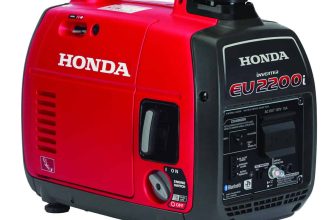
Honda’s current U.S. inverter line has moved on from the old EU1000i and EU3000iS era. The current lineup includes the EU2200i at 2,200 starting watts and 1,800 running watts, with a 47.4-pound weight, 48 to 57 dBA noise rating, CO-MINDER, and Bluetooth, per Honda’s published specs. Honda also lists the EU3200i as the EFI successor to the discontinued EU3000iS, with the EU7000iS as the 7,000-watt EFI flagship.
That matters because this page’s old recommendation block led with the discontinued EU3000iS. For current new buyers, the Honda pick shifts to the EU2200i unless you need the larger EU3200i or EU7000iS class.
Check the Honda EU2200i price on Amazon →
Generac generators
Generac is the brand to start with if the job is automatic home backup. The company is based in Waukesha, Wisconsin, and its Guardian series is the category leader for homeowners who want a permanently installed standby generator that starts itself during an outage.
Generac’s own published example for a 22kW Guardian lists 22,000 watts on LP, 19,500 watts on natural gas, 67 dBA, a 200-amp automatic transfer switch, and a 5-year limited warranty. Generac also says the G-Force engines used in Guardian units are built in Wisconsin, while its portable generators are globally sourced.
The portable side is more mixed but still respectable. The current GP6500 COsense is rated at 8,125 starting watts and 6,500 running watts with CO shutoff, and the older GP2200i inverter has been replaced by the GP2500i with COsense.
Westinghouse generators
Westinghouse is one of the strongest value brands in portable generators, especially if you’re shopping by watts per dollar. The generator line is a licensed outdoor power equipment brand, not the same corporate setup buyers may assume from the historic Westinghouse name.
The current licensing story is clearer now. MWE ran the Westinghouse outdoor power equipment license from Columbus, Ohio, starting in 2016, and per the companies’ own announcements, Westinghouse Electric & Manufacturing acquired MWE outright in late 2024. The units are imports designed and supported from Ohio.
The appeal is obvious on models like the WGen9500DF, rated at 12,500 starting watts and 9,500 running watts on dual fuel with a 14-50R outlet, and the iGen4500 inverter, rated at 4,500 starting watts and 3,700 running watts with a 52 dBA figure. Westinghouse also backs many units with a 3-year warranty.
Check the Westinghouse iGen4500 price on Amazon →
Champion generators
Champion Power Equipment, headquartered in Santa Fe Springs, California, has the widest value lineup in this class. If Honda is the premium benchmark, Champion is the practical shelf-everywhere brand that gives homeowners, RV owners, and farm-store shoppers a lot of generator for the money.
The lineup runs from 2,500-watt ultralights like the 200950, 200951, and 200961 to bigger open-frame and dual-fuel machines. Champion’s 200988 open-frame inverter is rated at 4,500 starting watts and 3,500 running watts on gas, with 3,150 running watts on LP and a 61 dBA published figure. The 100891 dual-fuel model adds a 14-50R outlet for heavier portable-backup setups.
Champion also experimented with EFI on models like the discontinued 100485 PRO. The brand’s real advantage today is breadth, a 3-year warranty, lifetime tech support, and retail availability from Amazon to farm stores.
Check the Champion 200988 price on Amazon →
Briggs & Stratton generators
Briggs & Stratton is the old small-engine name many homeowners already know from mowers, pressure washers, and outdoor equipment. The company is based in Milwaukee, Wisconsin, and carries more than 100 years of small-engine history, even after its 2020 bankruptcy sale to KPS Capital Partners.
The generator line today is not the loudest brand in the market, but it still deserves a look if you want a value-priced inverter backed by a familiar parts ecosystem. Current picks include the P2400 PowerSmart inverter, rated at 2,400 starting watts and 1,800 running watts with CO Guard, and the Q6500 quiet inverter, listed at 6,500 starting watts.
Briggs makes the most sense for buyers who care about practical serviceability and recognizable engine DNA more than trendy feature lists. It’s not the hottest brand, but it’s still a real one.
DuroMax generators
DuroMax and DuroStar, based in Ontario, California, are best known for big open-frame generators with dual-fuel and tri-fuel options at aggressive prices. If you want a portable that can feed a transfer inlet, run larger loads, and cost less than the premium brands, DuroMax belongs on the list.
The XP12000EH shows the brand’s formula. It is rated at 12,000 starting watts and 9,500 running watts on gasoline, and 10,200 starting watts with 8,075 running watts on LP, with a 14-50R outlet and a 3-year warranty. That is exactly the kind of spec sheet that gets homeowners looking at DuroMax during storm season.
The trade-off is refinement. These are imports with U.S. support, and buyers should verify parts, service paths, and local repair options before relying on one as the main outage plan. The diesel DS7000Q has been discontinued.
WEN generators
WEN is the budget inverter brand that keeps punching above its price class. It’s not a dealer-network brand like Honda, but WEN often publishes straightforward specs and sells simple inverter generators that make sense for occasional camping, tailgating, and light emergency use.
The 56203i is the clean example. WEN lists it at 2,000 starting watts and 1,700 running watts, with a 51 dBA figure, under 1.2% THD, and a carb-drain shutoff. Those are the kinds of details buyers should want from any inverter spec sheet because they tell you more than just peak wattage.
The drawback is the online-first support model and thinner dealer network. If you want the lowest-risk ownership experience, Honda is better. If you want a cheap inverter with honest published specs, WEN is one of the first budget brands to check.
Pulsar generators
Pulsar sits in the budget tier, and the value can be real if you go in with the right expectations. The brand’s G12KBN 12kW dual-fuel class generator is the kind of product that attracts buyers who need a lot of backup wattage without paying premium-brand money.
The compromise is refinement and support depth. Budget import brands can deliver strong spec sheets, but you need to think harder about noise, fit and finish, warranty handling, and parts access years later. That doesn’t make Pulsar a bad buy; it makes Pulsar a value buy with more homework attached.
For buyers considering this tier, we keep a separate deep-dive page with the current pros, cons, and model notes in our Pulsar generator reviews. Treat the brand as a practical budget option, not a Honda substitute.
A-iPower generators
A-iPower is another budget brand, with small inverters like the SUA2000iV and SUA2300i sold through big-box channels. These can be fine entry-level units for buyers who need basic portable power and don’t want to pay premium inverter money.
The caution is spec-sheet noise. Our SUA2300i review flags a 52-advertised versus 62-database dBA discrepancy, which is exactly the kind of thing shoppers should watch for in the budget class. A lower dBA number can look great on a listing, but the brand earns more trust when the load level and measurement context are clear.
A-iPower makes sense for occasional use, small loads, and buyers who are comfortable with a value product. If the generator is your main outage plan or RV power source, compare support and noise claims carefully before buying.
GENMAX generators
GENMAX is a newer import brand worth watching because it is pushing large dual-fuel inverters into a space that used to be thin. Most high-output portables are open-frame units, so a brand offering inverter output at bigger wattages can get attention fast.
The GM9000iED is the headline example. GENMAX lists it at 9,000 starting watts and 7,600 running watts, in the 50-amp class, with CO Detect and remote start. That’s an interesting spec-per-dollar mix for buyers who want quieter big-watt portable power without moving to a permanent standby unit.
The honest caution is brand maturity. GENMAX may fit the quiet big-watts niche, but buyers should verify service channels, parts availability, and warranty handling before making it the center of a home backup plan. Specs get your attention; support keeps the machine useful.
DeWalt generators
DeWalt is a licensed generator brand, and buyers need to separate the old contractor-line reputation from the current retail lineup. The Honda-powered DXGN contractor models, including the DXGN4500 and DXGN6000, are gone from DeWalt’s current U.S. generator pages.
The current DXGNR line, including the DXGNR4000 with CO Protect, carries the DeWalt name at Home Depot. That does not make it the same thing as the old Honda-powered DXGN era. If you’re buying new, judge the exact model in front of you, not the yellow paint or memories of older jobsite units.
We still review the old units because used buyers ask about them. If you’re looking at a secondhand contractor model, our DeWalt DXGN6000 review explains why that Honda-powered era has a different story than the current licensed lineup.
Yamaha generators
Yamaha used to be one of the premium inverter-generator names in the U.S., especially for buyers cross-shopping Honda. That changed when Yamaha exited the U.S. generator business in 2023 and transferred operations to Willbe Power.
EF-series units that are still sitting on shelves should be treated as end-of-line buys. That doesn’t mean the machine is junk. It means the buying question changes from “Is Yamaha a good generator brand?” to “Who will handle warranty, parts, and service if something fails?”
If the seller can answer those questions clearly, an EF-series closeout may still make sense for the right buyer. If the support answer is vague, spend the money on a current brand with an active U.S. generator lineup.
Firman, Ryobi, and the store brands
Firman and Ryobi both deserve a fair mention, but they are not the same kind of brand as Honda, Generac, or Champion. Firman is Costco’s value-volume play, with broad dual-fuel coverage and appealing warehouse-club pricing. Ryobi is Home Depot’s house-brand generator option, helped by the One+ battery ecosystem and strong shelf visibility.
Both can be fine for casual homeowner use, short outages, and buyers who already shop those channels. Neither has the same service depth as the major generator-first brands. If the generator will mostly sit in the garage for occasional use, a store brand can make sense; if it’s powering medical equipment, a transfer-switch backup plan, or long RV trips, move up the support ladder.
How to actually pick a brand
Brand matters through things you can verify, not through logo loyalty. Start with published spec honesty: does the manufacturer state running watts clearly, separate gas and LP output where needed, and give noise ratings with enough context to be useful? A good spec sheet should not make you guess whether the number is peak output, running output, or a best-case marketing claim.
Next, check warranty length and who actually services it. A 3-year warranty looks good on paper, but the real question is whether you can get parts, reach support, and find a repair path without shipping a heavy generator across the country. For corporate background and sourcing context, our guide to the best generators made in the USA explains who builds where and where the label can get blurry.
Parts availability years later is the third filter. Honda and Generac are strong here because their dealer and installer networks are broad. Briggs & Stratton still benefits from a legacy parts ecosystem. Budget import brands can be worth buying, but you should assume more responsibility for verifying carburetors, control boards, sensors, handles, wheels, and warranty channels before the storm hits.
Match the brand tier to the job. Honda is the benchmark if you want the lowest-risk portable ownership experience. Generac is the first call for a fixed home standby system, and our portable vs standby generator guide is the right place to decide if you need an installed unit or a portable connected through a safe transfer setup.
Champion, Westinghouse, and DuroMax are the value-muscle tier. They’re where many homeowners land when they need serious portable output, dual fuel, and outlets that can work with a home backup plan. Champion also has strong RV crossover, and the smaller 2,500-watt class shows why in our Champion 200951 review.
For quiet small power, start with inverter generators instead of open-frame machines. WEN is the budget standout, Honda is the premium bet, and Champion sits in the middle with a wide lineup. Our best inverter generators roundup sorts that category by actual use case instead of treating every quiet box the same.
RV owners should think harder about noise, fuel, and outlet fit than raw peak wattage. A loud open-frame generator may be fine at home during an outage and still be the wrong call at a campground. Our best RV generators guide narrows the field around camping use instead of whole-house backup.
Contractor and mid-frame buyers have a different set of priorities. You may care less about whisper-quiet operation and more about rugged frames, serviceable engines, and jobsite durability. For a Honda mid-frame example, see our Honda EM5000SX review, which shows how a conventional portable can still make sense outside the small-inverter category.
Bottom line
Pick Honda if you want the safest portable-generator brand and can pay for it. Pick Generac if you want an automatic standby system for the house.
Pick Westinghouse, Champion, or DuroMax if you want the most portable watts for the money, with Champion offering the broadest value lineup. Pick WEN, A-iPower, or Pulsar only after checking the exact model’s specs and support path, and treat GENMAX as an interesting big-inverter niche brand rather than the default safe choice.
Frequently asked questions
What is the most reliable generator brand?
Honda is still the reliability benchmark for portable generators. Generac earns the top spot for installed home standby systems, while Champion, Westinghouse, and DuroMax compete hard in the value portable tier. The right answer depends on whether you need quiet inverter power, whole-house standby, or low-cost backup watts.
Who makes Westinghouse generators?
Westinghouse outdoor power equipment is a licensed brand. MWE ran the license from Columbus, Ohio, starting in 2016, and Westinghouse Electric & Manufacturing acquired MWE outright in late 2024. The generators are imports designed and supported from Ohio.
Is Generac a good generator brand?
Yes, especially for home standby. Generac’s Guardian line includes a 22kW example rated at 22,000 watts on LP and 19,500 watts on natural gas, with a 200-amp automatic transfer switch and 5-year limited warranty per Generac. Its portables are fine, but Generac’s strongest reputation is installed standby backup.
Are Champion generators good?
Yes, Champion is one of the strongest value brands in portable generators. The lineup is broad, from 2,500-watt ultralights to larger dual-fuel and open-frame inverter models, and Champion backs many units with a 3-year warranty plus lifetime tech support. It’s not Honda-premium, but it’s a practical buy for many homeowners and RV owners.
Did Yamaha stop making generators?
Yamaha exited the U.S. generator business in 2023 and transferred operations to Willbe Power. EF-series units still on shelves should be treated as end-of-line buys. Before buying one, ask who handles warranty, parts, and service.
Who makes DeWalt generators?
DeWalt generators are licensed products. The older Honda-powered DXGN contractor line, including the DXGN4500 and DXGN6000, is gone from DeWalt’s current U.S. generator pages. The current DXGNR line, such as the DXGNR4000 with CO Protect, carries the DeWalt name at Home Depot.
Are cheap generator brands like Pulsar worth it?
They can be worth it if you accept the trade-off. Pulsar’s G12KBN 12kW dual-fuel class offers real value, but refinement, support depth, and parts availability are the questions to check before buying. Budget brands make the most sense for buyers who compare exact model specs instead of trusting the logo alone.