
Generator Wattage Calculator: Find the Right Size Generator
Size a portable generator by adding the running watts for everything you’ll run at the same time, then add only the single largest additional starting-watt surge. For most homeowners, that puts an essentials outage setup around 3,000-4,000 watts, a 30-amp RV around a 4,500W-class inverter, and central AC or most-of-house loads in 10,000+ watt territory.
Use the calculator below first, then sanity-check your result against the wattage chart and examples on this page. The goal is simple: enough starting capacity to handle motors, enough running capacity to avoid running the generator flat-out.
Wattage Calculator
How Will You Primarily Use The Generator?
Step 1
Select an option below
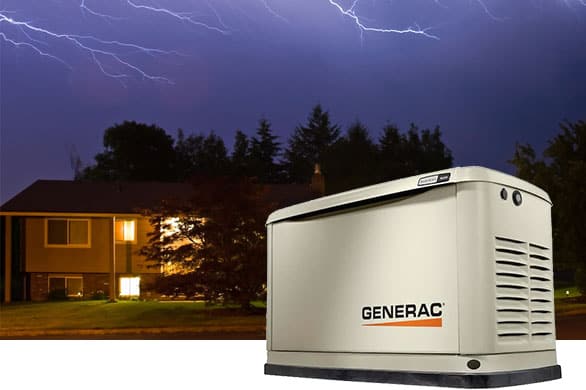
- Home back up power
- Primary home power
Includes:
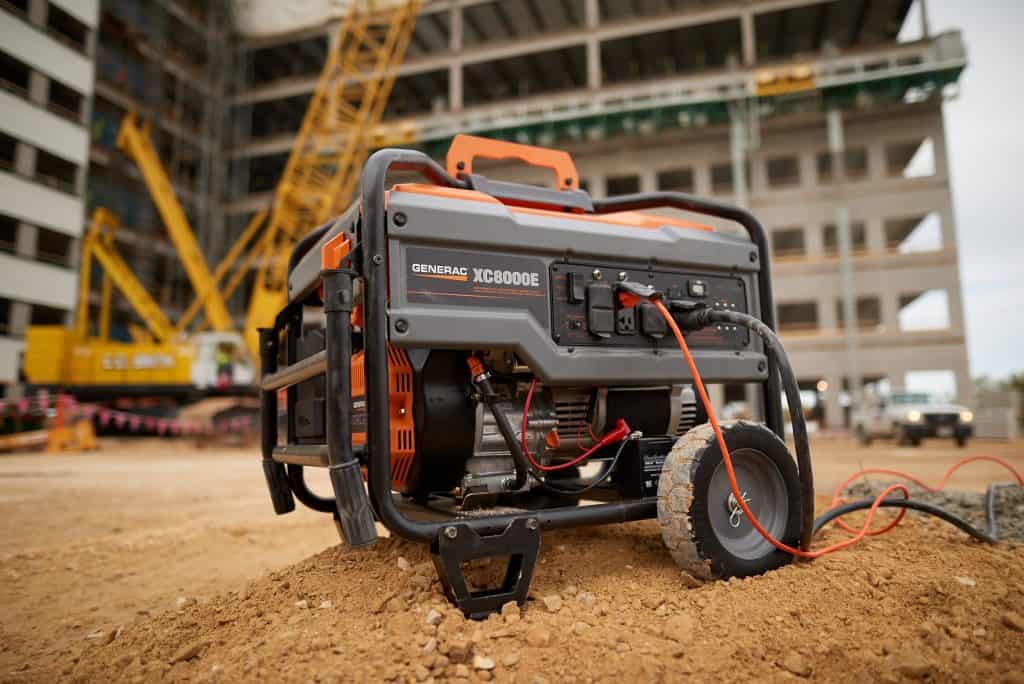
- Construction/Contractor
- Rental fleet
- Farm/Agricultural
Includes:
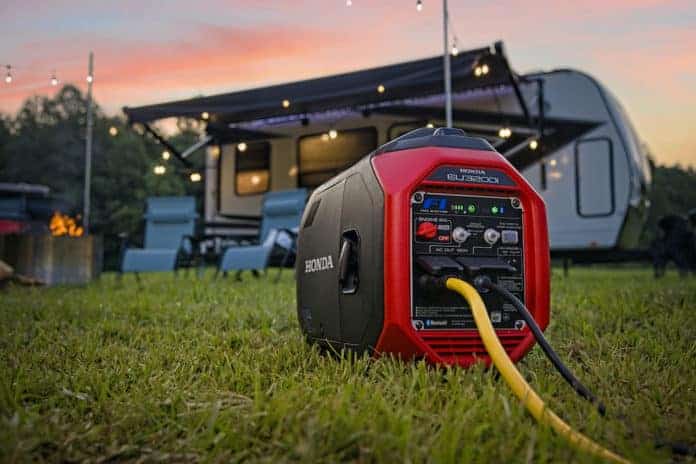
- RV vehicle
- Camping
- Tailgating
- Outdoor events
Includes:
How to size a generator the right way
The standard portable generator sizing method comes from the Lowe’s/Generac wattage worksheet: list what runs together, total the running watts, then add the largest single starting surge. You can see the source worksheet here: portable generator wattage chart.
Here’s the method to use with the calculator above:
- List every device you’ll run at the same time and add up all running watts.
- Find the one device with the highest additional starting watts.
- Add that single starting-watt number to the running total. That gives you the starting, or surge, capacity your generator needs.
You don’t add every motor’s starting surge. Motors start intermittently, not all at once, so the worksheet method uses the largest single additional surge.
The worksheet’s own example shows the math clearly:
| Load | Running watts | Additional starting watts |
|---|---|---|
| Refrigerator | 700 | 2,200 |
| Sump pump | 1,050 | 2,150 |
| Belt sander | 1,200 | 2,400 |
| Air compressor 1/2 HP | 1,000 | 2,000 |
| Total running watts | 3,950 | Use highest surge: 2,400 |
That setup needs 3,950 running watts and 6,350 starting watts. A generator rated below either number is undersized for that exact load plan.
Generator wattage chart: running and starting watts
Use this chart as a baseline, then check the nameplate on your appliance. The running watts and additional starting watts below are from the standard Lowe’s/Generac portable generator worksheet unless noted.
| Appliance | Running watts | Additional starting watts |
|---|---|---|
| Refrigerator/Freezer | 700 | 2,200 |
| Sump pump 1/2 HP | 1,050 | 2,150 |
| Microwave, 1000W | 1,000 | 0 |
| Coffee maker | 1,000 | 0 |
| Space heater | 1,800 | 0 |
| Humidifier | 175 | 0 |
| Computer with 17" monitor | 800 | 0 |
| Box fan | 100 | 0 |
| Cell phone charger | 25 | 0 |
| AM/FM radio | 100 | 0 |
| RV air conditioner, 13,500 BTU | 700 | 1,500 |
| Circular saw 7-1/4" | 1,400 | 2,300 |
| Miter saw 10" | 1,800 | 3,300 |
| Table saw 10" | 2,000 | 2,000 |
| Air compressor 1 HP | 1,400 | 3,600 |
| Belt sander | 1,200 | 2,400 |
| Hand drill 1/2" | 600 | 900 |
| Airless paint sprayer 1/3 HP | 600 | 1,200 |
| Reciprocating saw | 960 | 0 |
| Halogen work light | 1,000 | 0 |
The worksheet’s 27-inch TV figure is dated CRT-era data. A modern 55-inch LED TV usually draws roughly 60-120 watts, so use the LED number on your TV’s label instead of the old worksheet number.
Some loads vary too much by model to size from a generic chart alone:
- Well pump 1 HP: about 1,000 running watts and 2,000-3,000 starting watts.
- Furnace blower fan: about 500-800 running watts, roughly double to start.
- Window AC: about 1,200 running watts and about 1,800 starting watts for a typical 10-12k BTU 120V unit.
- Central AC, 3-ton: 10,000+ total watts, which usually means a large portable or a home standby generator.
Worked examples: what size generator do you need?
Essentials-only outage kit
This is the common fridge, fan, lights, TV, and charging setup. It’s the right target if you want food cold, phones charged, a little airflow, and basic comfort without trying to run the whole house.
| Load | Running watts | Additional starting watts |
|---|---|---|
| Refrigerator/Freezer | 700 | 2,200 |
| 4 LED bulbs | 40 | 0 |
| 55" LED TV | 100 | 0 |
| Phone and laptop charging | 90 | 0 |
| Box fan | 100 | 0 |
| Total needed | 1,030 | Highest surge: 2,200 |
That comes out to about 1,030 running watts and about 3,230 starting watts. A 3,000-4,000W class generator covers it with headroom; start with our best 3000-watt generators guide if that’s your use case.
30-amp RV setup
A 30-amp RV plug is capped at 3,600 watts because 120V x 30A = 3,600 watts. That cap matters more than the biggest number printed on the generator box.
| Load or limit | Running watts | Additional starting watts |
|---|---|---|
| 30-amp RV plug limit | 3,600 | Not a surge rating |
| RV air conditioner, 13,500 BTU, worksheet figure | 700 | 1,500 |
| Many 13.5k BTU RV AC units in the real world | 1,200-1,600 | Check nameplate |
A 13.5k BTU RV AC, fridge, converter, and a few small loads usually fit best under a 4,500W-class inverter. Real RV air conditioner draw varies a lot by model and age, so read the nameplate on your unit and use our 30-amp RV generator sizing guide before buying.
Jobsite saw and compressor pair
Power tools are where starting watts bite people. A compressor and saw may look manageable by running watts, but the compressor’s starting surge sets the generator size.
| Tool | Running watts | Additional starting watts |
|---|---|---|
| Circular saw 7-1/4" | 1,400 | 2,300 |
| Air compressor 1 HP | 1,400 | 3,600 |
| Total needed | 2,800 | Highest surge: 3,600 |
The math is 2,800 running watts plus 3,600 additional starting watts, so the requirement is 6,400 starting watts. That points to a 6,500W+ class generator for this pair.
Most of the house, including central AC
Central air changes the whole sizing conversation. A 3-ton central AC can push you into 10,000+ total watts, and that usually means a large portable generator or a home standby setup.
If you’re trying to run most of the house, look at the best 12000-watt generator class and plan fuel storage before the storm. If propane is your backup fuel, use our generator propane use guide so you’re not guessing on runtime.
Starting watts vs running watts
Running watts are what an appliance needs after it’s already operating. Starting watts are the short burst a motor needs to get moving, and motors commonly need 2-3x their running watts to start.
Resistive loads are simpler. Space heaters, bulbs, and coffee makers don’t have a meaningful startup surge, so the worksheet lists 0 additional starting watts for those kinds of loads.
Sizing rules the spec sheets don’t spell out
Buy 20-25% more capacity than your calculated need. Running a generator flat-out is hard on the engine and leaves no room for the next load. A good target is to load it to about 80% continuous max.
Use the propane rating if you’ll run propane. Dual-fuel generators make about 10% fewer watts on propane than gasoline. If propane is your main fuel, size against the propane output, not the gasoline number.
Account for altitude. Small engines lose roughly 3% of output per 1,000 ft of elevation. If you camp or live at elevation, that loss comes straight out of your usable wattage.
Separate motor loads from resistive loads. Motors need surge capacity; heaters and coffee makers usually don’t. That’s why a fridge can be harder to start than its running watts suggest, while a space heater is just a steady heavy load.
Good generators for each size class
Use these as size-class examples after you run the calculator above. Match the generator’s running watts and starting watts to your actual load list, especially if you’ll be on propane or at elevation.
Small and quiet 2,000W class
Honda EU2200i: 1,800 running watts, 47 lb, and still the quiet benchmark for small inverter generators.
Check current price on Amazon →
Mid-size 4,500W dual-fuel class
Champion 200988: 3,500W on gas, 3,150W on propane, electric start, and RV-ready.
Check current price on Amazon →
Whole-home portable 12,000W class
DuroMax XP12000EH: 9,500W on gas, dual fuel, and 50-state legal for big outage loads.
Check current price on Amazon →
Full appliance wattage reference
These are compiled estimates; check your appliance’s nameplate label because actual draw varies by model, age, and startup behavior.
| Appliance | Minimum | Maximum | Standby |
| 100W light bulb (Incandescent) | 100W | 100W | 0W |
| 22 Inch LED TV | 17W | 17W | 0.5W |
| 25″ Color TV | 150W | 150W | N/A |
| 3″ belt sander | 1000W | 1000W | N/A |
| 32 Inch LED TV | 20W | 60W | 1W |
| 42 Inch LED TV | 58W | 60W | 0.3W |
| 42 Inch Plasma TV | 450W | 600W | N/A |
| 46 Inch LED TV | 60W | 70W | 1W |
| 49 Inch LED TV | 85W | 85W | 1W |
| 55 Inch LED TV | 116W | 116W | 0.5W |
| 60W light bulb (Incandescent) | 60W | 60W | 0W |
| 65 Inch LED TV | 120W | 130W | 1W |
| 82 Inch LED TV | 228W | 295W | 0.5W |
| 9″ disc sander | 1200W | 1200W | N/A |
| Air Cooler | 65W | 80W | N/A |
| Air Fryer | 1500W | 1500W | N/A |
| Air Purifier | 25W | 30W | N/A |
| Amazon Echo | 3W | 3W | 2W |
| Amazon Echo Dot | 2W | 3W | N/A |
| Amazon Echo Show | 2W | 4W | 0.1W |
| American-Style Fridge Freezer | 40W | 80W | N/A |
| Apple TV | 3W | 6W | 0.3W |
| Aquarium Pump | 20W | 50W | N/A |
| AV Receiver | 450W | 450W | N/A |
| Bathroom Towel Heater | 60W | 150W | N/A |
| Ceiling Fan | 60W | 70W | 0W |
| Chromebook | 45W | 45W | N/A |
| Chromecast | 2W | 2W | N/A |
| Clock radio | 1W | 2W | N/A |
| Clothes Dryer | 1000W | 4000W | N/A |
| Coffee Maker | 800W | 1400W | N/A |
| Computer Monitor | 25W | 30W | N/A |
| Cooker Hood | 20W | 30W | 0W |
| Corded Drill | 600W | 850W | N/A |
| Corded Electric Handheld Leaf Blower | 2500W | 2500W | N/A |
| Cordless Drill Charger | 70W | 150W | N/A |
| CPAP machine | 30W | 60W | N/A |
| Curling Iron | 25W | 35W | 0W |
| DAB Mains Radio | 5W | 9W | N/A |
| Deep Freezer | 19W | 19W | N/A |
| Dehumidifier | 240W | 240W | N/A |
| Desktop Computer | 100W | 450W | N/A |
| Dishwasher | 1200W | 1500W | N/A |
| Domestic Water Pump | 200W | 300W | 0W |
| DVD Player | 26W | 60W | N/A |
| Electric Blanket | 200W | 200W | N/A |
| Electric Boiler | 4000W | 14000W | N/A |
| Electric Doorbell Transformer | 2W | 2W | N/A |
| Electric Heater Fan | 2000W | 3000W | N/A |
| Electric Kettle | 1200W | 3000W | 0W |
| Electric Mower | 1500W | 1500W | N/A |
| Electric Pressure Cooker | 1000W | 1000W | N/A |
| Electric Shaver | 15W | 20W | N/A |
| Electric stove | 2000W | 2000W | N/A |
| Electric Tankless Water Heater | 6600W | 8800W | N/A |
| Electric Thermal Radiator | 500W | 500W | N/A |
| Electric Toothbrush Charger | 6W | 6W | N/A |
| Espresso Coffee Machine | 1300W | 1500W | N/A |
| EV Car Charger | 2000W | 7000W | N/A |
| EV Home Charger | 1600W | 3400W | N/A |
| Evaporative Air Conditioner | 2600W | 2600W | N/A |
| External Hard Drive | 1W | 3W | N/A |
| Extractor Fan | 12W | 12W | N/A |
| Fluorescent Lamp | 28W | 45W | N/A |
| Food Blender | 300W | 400W | N/A |
| Food Dehydrator | 800W | 800W | N/A |
| Freezer | 30W | 50W | N/A |
| Fridge | 100W | 220W | N/A |
| Fridge / Freezer | 150W | 400W | N/A |
| Fryer | 1000W | 1000W | N/A |
| Game Console | 120W | 200W | N/A |
| Gaming PC | 300W | 600W | 1W |
| Garage Door Opener | 300W | 400W | N/A |
| Google Home Mini | 15W | 15W | 2W |
| Guitar Amplifier | 20W | 30W | N/A |
| Hair Blow Dryer | 1800W | 2500W | N/A |
| Hand Wash Oversink Water Heater | 3000W | 3000W | N/A |
| Heated Bathroom Mirror | 50W | 100W | N/A |
| Heated Hair Rollers | 400W | 400W | N/A |
| Home Air Conditioner | 1000W | 4000W | N/A |
| Home Internet Router | 5W | 15W | N/A |
| Home Phone | 3W | 5W | 2W |
| Home Sound System | 95W | 95W | 1W |
| Hot Water Dispenser | 1200W | 1300W | N/A |
| Hot Water Immersion Heater | 3000W | 3000W | N/A |
| Humidifier | 35W | 40W | N/A |
| iMac | 60W | 240W | 1W |
| Induction Hob (per hob) | 1400W | 1800W | N/A |
| Inkjet Printer | 20W | 30W | N/A |
| Inverter Air conditioner | 1300W | 1800W | N/A |
| Iron | 1000W | 1000W | N/A |
| Jacuzzi | 3000W | 7500W | 1500W |
| Kitchen Extractor Fan | 200W | 200W | N/A |
| Laptop Computer | 50W | 100W | N/A |
| Laser Printer | 600W | 800W | N/A |
| Lawnmower | 1000W | 1400W | N/A |
| LED Christmas Lights | 5W | 5W | N/A |
| LED Light Bulb | 7W | 10W | 0W |
| LG Soundbar | 23W | 30W | 0.5W |
| Mi Box | 5W | 7W | 3W |
| Microwave | 600W | 1700W | 3W |
| Night Light | 1W | 1W | 0W |
| Nintendo Switch AC Adapter | 7W | 40W | N/A |
| Outdoor Hot Tub | 60W | 500W | N/A |
| Oven | 2150W | 2150W | N/A |
| Paper Shredder | 200W | 220W | N/A |
| Pedestal Fan | 50W | 60W | N/A |
| Percolator | 800W | 1100W | N/A |
| Philips Hue Smart Bulb | 8W | 9W | 0.4W |
| Phone Charger | 4W | 7W | N/A |
| PlayStation 4 | 85W | 90W | N/A |
| PlayStation 5 | 160W | 200W | N/A |
| Portable Air Conditioner | 1000W | 1200W | N/A |
| Power Shower | 7500W | 10500W | 0W |
| Pressure Cooker | 700W | 700W | N/A |
| Pressure Washer | 1500W | 1500W | N/A |
| Projector | 220W | 270W | 1W |
| Refrigerator | 100W | 200W | N/A |
| Rice Cooker | 200W | 800W | N/A |
| Ring Spotlight Cam Wired | 25W | 4W | 2W |
| Sandwich Maker | 700W | 1000W | N/A |
| Scanner | 10W | 18W | N/A |
| Set Top Box | 27W | 30W | N/A |
| Sewing Machine | 70W | 80W | N/A |
| Singer Sewing Machine | 100W | 100W | N/A |
| Slow Cooker | 160W | 180W | N/A |
| Smoke Detector | 0W | 1W | N/A |
| Space Heater | 2000W | 5000W | N/A |
| Steam Iron | 2200W | 2500W | N/A |
| Steriliser | 650W | 650W | N/A |
| Straightening Iron | 75W | 300W | N/A |
| Strimmer | 300W | 500W | N/A |
| Submersible Water Pump | 200W | 400W | N/A |
| Table Fan | 10W | 25W | N/A |
| Table Top Fridge | 10W | 15W | N/A |
| Tablet Charger | 10W | 15W | N/A |
| Tablet Computer | 5W | 10W | N/A |
| Toaster | 800W | 1800W | 0W |
| Tower Fan | 60W | 60W | N/A |
| Treadmill | 280W | 900W | N/A |
| Tube Light (1500mm) | 22W | 22W | N/A |
| TV (19″ color) | 40W | 100W | 1W |
| Vacuum Cleaner | 450W | 900W | 0W |
| Wall Fan | 45W | 60W | 0W |
| Washing Machine | 500W | 500W | 1W |
| Water Dispenser | 100W | 100W | N/A |
| Water Feature | 35W | 35W | N/A |
| Water Filter and Cooler | 70W | 100W | N/A |
| WiFi Booster | 1W | 2W | N/A |
| WiFi Router | 4W | 10W | 4W |
| Window Air Conditioner | 500W | 1500W | N/A |
| Wine cooler (18 bottles) | 83W | 83W | 0W |
| Xbox One | 50W | 110W | 14W |
Bottom line
Use the calculator above, then follow the worksheet method: total the running watts and add the single largest additional starting surge. For a basic outage kit, a 3,000-4,000W class generator is usually enough; for a 30-amp RV, a 4,500W-class inverter is the sweet spot; for central AC or most-of-house loads, plan on 10,000+ watts.
Buy with 20-25% headroom, size against the propane rating if you’ll use propane, and account for altitude if it applies. That keeps the generator from living at full throttle and gives motor loads room to start cleanly.
Frequently asked questions
What size generator do I need for my house?
For essentials only, most homes land around 3,000-5,000 watts. That covers a refrigerator, lights, TV, charging, and a fan with room for startup surge. If you want most of the house with central AC, you’re usually in 10,000+ watt territory, and true whole-house coverage is often standby-generator territory.
What will a 4,500-watt generator run?
A 4,500-watt generator can run a basic essentials kit and often an RV AC or a typical window AC if you manage loads. For example, an essentials kit at about 1,030 running watts plus a typical window AC at about 1,200 running watts is about 2,230 running watts; adding the refrigerator’s 2,200-watt surge puts the starting need around 4,430 watts.
How many watts does a refrigerator need?
Per the standard Lowe’s/Generac worksheet, a refrigerator/freezer uses 700 running watts and needs about 2,200 additional watts to start. That means you size it as 700 running watts, but your generator must have surge capacity for the startup hit.
What size generator do I need for a 30-amp RV?
A 30-amp RV plug is limited to 3,600 watts because 120V x 30A = 3,600 watts. A 4,500W-class inverter is the common sweet spot because it can handle the RV AC startup surge while staying practical for camping.
Do I add up all the starting watts?
No. Add up all running watts, then add only the single largest additional starting-watt number. Motors start intermittently, not all at once, so adding every surge together oversizes the generator.
Can a generator be too big?
Yes. An oversized generator costs more, burns more fuel, makes more noise, and weighs more than necessary. Light loading can also glaze some engines, so a better target is sizing your normal load around 80% of the generator’s continuous capacity.
How much extra generator capacity should I buy?
A good rule of thumb is 20-25% more capacity than your calculated need. That gives you headroom for startup surge, altitude loss, propane derating, and the small loads people forget to count.