A 22 kW Generac burns about 2.53 gallons of propane per hour at half load and 3.90 gallons per hour at full load, per Generac’s published spec sheet. That works out to about 61 gallons per day at sustained half load, while a smaller 10 kW Generac is about 0.97 gallons per hour at half load.
This page gives you the per-model Generac propane consumption chart, the per-day math, and the 120-, 250-, and 500-gallon tank runtime numbers worked out with the normal 80% propane fill rule. Use it for burn-rate planning, then let your propane company and installer handle tank sizing, regulator selection, and gas piping.
Generac propane consumption chart (10-26 kW)
The figures below are Generac’s published liquid-propane fuel-consumption numbers from the company’s per-model spec sheets. “Approx. gal/day” uses the half-load number multiplied by 24 hours, because half load is the more realistic planning figure for a whole-house standby generator during a long outage.
| Model size | Gal/hr at 1/2 load | Gal/hr at full load | Approx. gal/day at 1/2 load |
|---|---|---|---|
| 10 kW | 0.97 | 1.48 | 23 |
| 13 kW | 1.54 | 2.45 | 37 |
| 14 kW | 1.81 | 3.07 | 43 |
| 16 kW | 1.70 | 2.99 | 41 |
| 18 kW | 1.70 | 3.02 | 41 |
| 20 kW | 2.37 | 3.56 | 57 |
| 22 kW | 2.53 | 3.90 | 61 |
| 24 kW | — | — | — |
| 26 kW | 2.06 | 3.63 | 49 |
Generac’s 20 kW figures vary slightly by model variant. One published 20 kW column lists 2.37 gallons per hour at half load and 3.56 at full load, while another lists 2.36 and 3.74, so match your exact model number to the correct spec-sheet column.
The 24 kW row is left open because Generac publishes that model on the same combined 20-24 kW Guardian sheet, and the cleanest answer is to pull the exact fuel column for your model number. The 24 kW shares the same 999cc G-Force engine family as the 22 kW Guardian class, so the 22 kW figures are the sensible planning floor if you’re doing rough propane budgeting before the installer gives you the final sheet.
The chart also shows a real quirk in standby-generator fuel data: propane use is not perfectly monotonic by nameplate size. The 16 kW and 18 kW models publish the same 1.70 gallons per hour at half load, while the 26 kW model’s published half-load burn, 2.06 gallons per hour, is lower than the 22 kW model’s 2.53. Engine platform and actual load matter more than the badge on the enclosure.
What “half load” actually means for your house
Half load means the generator is delivering half of its rated output. For a 22 kW Generac, half load means the house is drawing 11 kW from the generator, not that half the circuits in the panel are turned on.
That distinction matters because most homes don’t sit at full standby-generator load all day. Motors cycle, thermostats satisfy, well pumps shut off, and large appliances pull hard only part of the time. A whole-house machine can cover a lot of circuits while still spending much of an outage well below full load.
For planning, use the half-load gallons-per-hour number as the realistic continuous-run estimate. Use the full-load number as the hard worst case, especially if electric heat, large air conditioning loads, pumps, or other high-demand equipment may run at the same time.
The simple daily math is just gallons per hour multiplied by 24 hours. A 22 kW Generac at half load is 2.53 gal/hr x 24 h = about 61 gal/day. A 14 kW is 1.81 x 24 = about 43 gal/day, and a 10 kW is 0.97 x 24 = about 23 gal/day.
How long will a propane tank run your Generac?
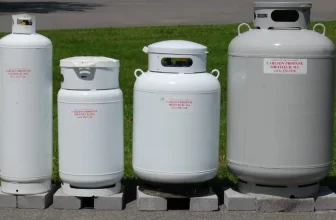
Propane tanks are not planned around the stamped tank size alone. Stationary propane tanks are typically filled to about 80%, so the usable planning capacity is about 96 gallons from a 120-gallon tank, 200 gallons from a 250-gallon tank, and 400 gallons from a 500-gallon tank.
Here’s what that means for a 22 kW Generac and a 10 kW Generac at half load, using Generac’s published propane burn rates.
| Tank size | Usable gallons at 80% | 22 kW at 1/2 load | 10 kW at 1/2 load |
|---|---|---|---|
| 120-gal tank | 96 gal | about 38 hours / 1.6 days | about 99 hours / 4.1 days |
| 250-gal tank | 200 gal | about 79 hours / 3.3 days | about 206 hours / 8.6 days |
| 500-gal tank | 400 gal | about 158 hours / 6.6 days | about 412 hours / 17 days |
The division is straightforward. For a 22 kW Generac on a 500-gallon tank, use 400 usable gallons / 2.53 gal/hr = about 158 hours, or about 6.6 days. At full load, the same tank is 400 / 3.90 = about 102 hours, or about 4.3 days.
For a 22 kW Generac on a 250-gallon tank, the half-load math is 200 / 2.53 = about 79 hours, or about 3.3 days. For a 120-gallon tank, it’s 96 / 2.53 = about 38 hours, or about 1.6 days.
So the direct 500-gallon answer is this: a 22 kW Generac runs roughly 6.6 days continuous at half load on a 500-gallon propane tank, with a full-load worst case of about 4.3 days. A 10 kW Generac stretches that same 500-gallon tank to about 17 days at half load.
Real outages are rarely continuous full-tilt running. Load management, thermostat discipline, and normal appliance cycling can stretch these numbers, while cold weather and high heating-related loads can pull them back down. If you’re planning for storm season, compare these runtimes against your outage risk and your refill access; our propane tank sizing guide walks through that decision in more detail.
The math behind the chart: BTU per gallon
Generac’s own Guardian spec sheet gives a useful cross-check for propane heat content: multiply LP cubic feet per hour by 2,500 for BTU content. On the 22 kW model, Generac lists 92 cubic feet per hour at half load, so 92 x 2,500 = 230,000 BTU/hr.
The other common propane anchor is gallons. EIA’s published energy constants list propane at 91,452 Btu per gallon. That’s why propane charts can be shown in BTU/hr, cubic feet per hour, or gallons per hour, depending on whether the sheet is aimed at the homeowner, the propane supplier, or the installer.
The field lesson is simple: propane burn follows load. A generator carrying a light house load is not burning fuel like the same generator carrying central air, pumps, kitchen loads, and battery chargers at the same time. The kW badge tells you what the unit can deliver; the connected load tells you how much fuel it is actually asking for.
That’s also why a bigger standby generator doesn’t always cost more to run every hour. If two machines are carrying the same house load, the difference comes down to engine platform, controls, and efficiency at that operating point. The published Generac chart is the right starting point, but your house load is the part you can manage during a long outage.
Propane vs natural gas on the same Generac
Generac dual-rates the same Guardian machines on LP and natural gas. Per Generac’s sheet, the 20 kW model is rated 20,000 watts on LP and 18,000 watts on natural gas, the 22 kW is 22,000 watts on LP and 19,500 watts on natural gas, and the 24 kW is 24,000 watts on LP and 21,000 watts on natural gas.
That means a “22 kW Generac” is a 22,000-watt generator on propane and a 19,500-watt generator on natural gas. The number most people quote from the badge is the LP rating.
The fuel supply side belongs to the installer and the fuel company. Generac’s sheet calls for 10-12 inches water column fuel pressure at the generator inlet for LP and 3.5-7 inches water column for natural gas. It also says the fuel pipe must be sized for full load, and the installation notes include a listed flexible fuel-line connector and an integral sediment trap.
Don’t size gas pipe from a web chart and start assembling fittings yourself. Use this page for burn-rate planning, then use the installer’s load calculation and the propane company’s tank and regulator requirements for the actual fuel system. For a broader fuel-use comparison across generator types, see our general propane consumption guide.
Tank monitoring and refill planning
A standby generator can burn through a storm tank faster than people expect, especially on a 22 kW whole-house unit. Don’t plan to run the tank down to the bottom before calling for propane; schedule refills against the per-day figures above and the refill window your propane company gives you.
Shop propane tank gauges on Amazon →
A tank gauge keeps you from guessing how much propane is left. A remote monitor is even better during bad weather because it answers the same question without a trip outside.
Shop wireless propane tank monitors on Amazon →
For hurricane planning, match your expected outage length to usable tank gallons, not tank label size. Our hurricane fuel storage guide covers the planning margin for storms, and our fuel cost and runtime calculator helps turn gallons per hour into a fuel budget.
If a whole-house burn rate is more than you need
A permanently installed standby generator is the comfortable answer, but it is not the lowest-fuel answer. Champion’s published spec for its 4,500W-class dual-fuel portable inverter has it burning a 20 lb, 4.7-gallon grill bottle in about 21 hours at 25% load, or roughly 0.22 gallons per hour. A whole-house 22 kW Generac at half load burns 2.53 gallons per hour, which is more than 10 times that portable rate.
If your real emergency need is refrigerator, lights, internet gear, and a few outlets, a portable generator plus grill bottles can be a much cheaper fuel plan. The tradeoff is convenience: you give up automatic transfer, whole-house coverage, and the clean permanent installation of a standby system.
Tri-fuel portables can also run on the same propane tank or the house natural-gas line at a fraction of the burn of a whole-house standby unit, depending on load and setup.
Check the DuroMax XP13000HXT tri-fuel price on Amazon →
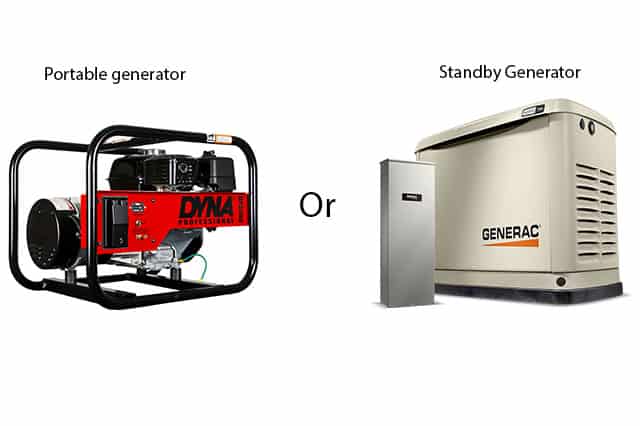
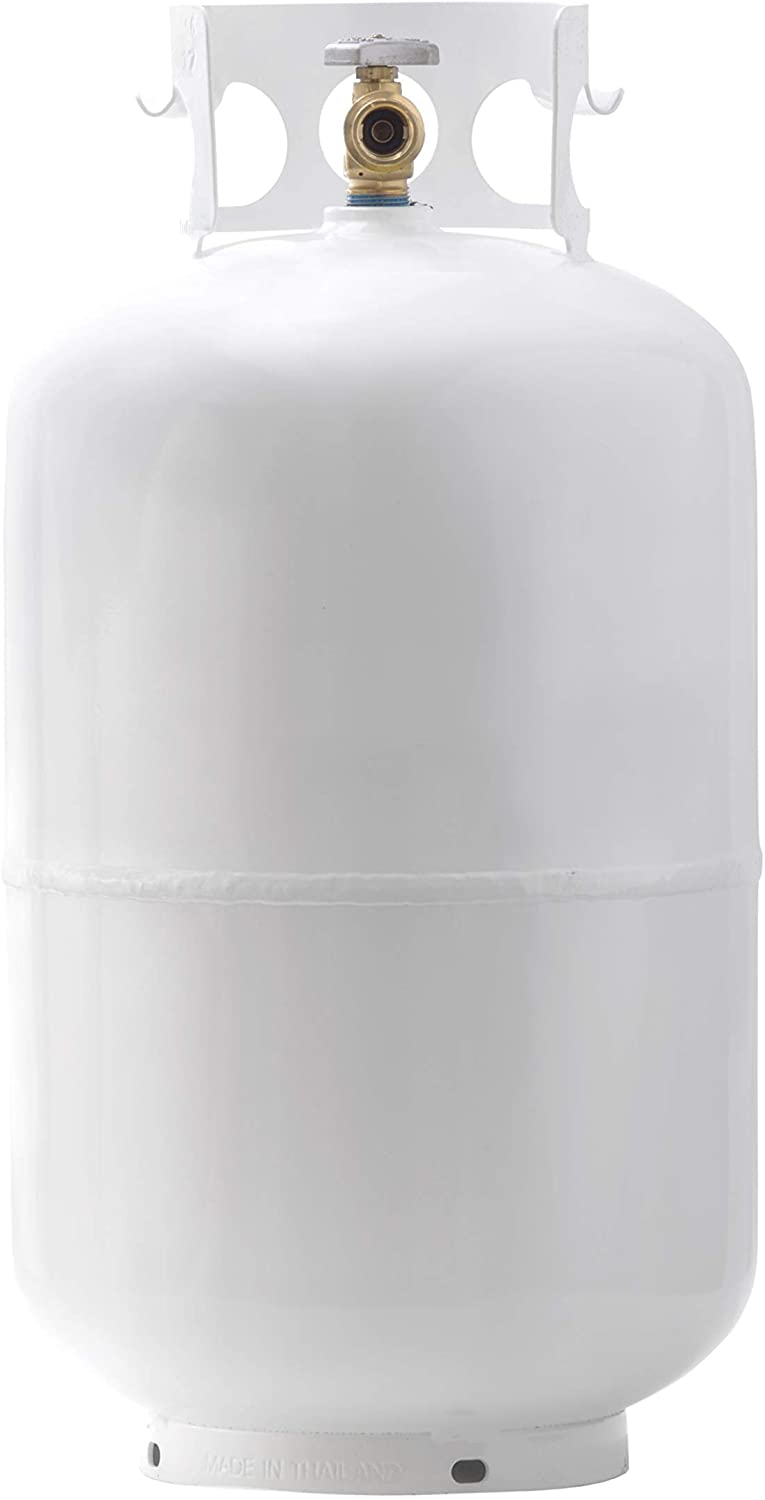
If you’re comparing small-tank propane runtime, start with our 20 lb propane tank runtime math. If you’re deciding between an installed standby unit and a portable setup, read the portable vs standby explainer before you buy equipment or pour a pad.
Bottom line
For a 22 kW Generac, plan on about 2.53 gallons of propane per hour at half load and about 61 gallons per day if it runs continuously at that level. A 500-gallon tank gives you about 400 usable gallons, or roughly 6.6 days at half load on that 22 kW unit.
Find your model’s gallons-per-hour figure, multiply by expected run hours, and size the tank using the 80% usable-fill rule. Let the propane company and installer handle the tank, regulator, and fuel-line work, because the pipe has to be sized for full load, not average load.
Frequently asked questions
How much propane does a 22kW Generac use per hour?
A 22 kW Generac uses about 2.53 gallons per hour at half load and 3.90 gallons per hour at full load, per Generac’s published spec sheet. At sustained half load, that is about 61 gallons per day.
How long will a 500-gallon propane tank run a Generac generator?
A 500-gallon propane tank has about 400 usable gallons at the normal 80% fill level. A 22 kW Generac runs about 6.6 days continuous at half load or about 4.3 days at full load. A 10 kW Generac stretches that same tank to about 17 days at half load.
How much propane does a Generac use in 24 hours?
Multiply your model’s half-load gallons per hour by 24. At half load, a 10 kW Generac uses about 23 gallons per day, a 14 kW uses about 43 gallons per day, and a 22 kW uses about 61 gallons per day.
Is a 250-gallon tank big enough for a whole-house Generac?
A 250-gallon tank gives you about 200 usable gallons at 80% fill. On a 22 kW Generac, that is about 3.3 days of continuous runtime at half load. That can cover many outages, but it is thin for a long storm outage.
Does a Generac put out less power on natural gas than propane?
Yes. Generac dual-rates these units: a 22 kW model is rated 22,000 watts on LP and 19,500 watts on natural gas, per the spec sheet. The LP number is the larger badge rating most people quote.
Why does the 26kW burn less propane at half load than the 22kW?
The 26 kW model uses a different engine platform. Generac’s published half-load figures are 2.06 gallons per hour for the 26 kW and 2.53 gallons per hour for the 22 kW. Consumption tracks engine platform and actual load, not just the kW badge.
What size propane tank do I need for a Generac?
For a 22 kW Generac at half load, a 120-gallon tank gives about 1.6 days, a 250-gallon tank gives about 3.3 days, and a 500-gallon tank gives about 6.6 days. Size the tank around your outage risk, refill access, and the 80% usable-fill rule.