The Champion 200951 is a strong buy if you want an ultralight inverter generator for camping, tailgating, and basic backup: it weighs 39 lb dry, makes 2,500 starting watts and 1,850 running watts, and usually sells around $480-$520. Its limits are just as clear: it is 120V-only, has no CO sensor, has no RV 30A outlet, and 1,850 running watts won’t cover large RV air conditioners or heavy home loads.
For shoppers comparing small inverter generators by model number, the 200951 is one of Champion’s best value plays. You’re getting clean power, low noise, a small fuel tank with long light-load runtime, and a real 3-year limited warranty without paying Honda money.


Check the Champion 200951 price on Amazon →
Champion 200951 specs at a glance
The Champion 200951 is a compact gasoline inverter generator built around portability, clean power, and low noise. Champion’s published specs put it in the 2,500-watt starting class, but the number that matters for continuous use is 1,850 running watts.
Here are the core specs from Champion’s published data and current retailer listings checked July 2026.
| Spec | Champion 200951 value |
|---|---|
| Starting watts | 2,500 watts |
| Running watts | 1,850 watts |
| Voltage | 120V only |
| Engine | 79cc Champion OHV |
| Start type | Recoil start with Cold Start Technology |
| Fuel tank | 1.1 gallons |
| Runtime | Up to 11.5 hours at 25% load, per Champion |
| Noise rating | 53 dBA at 23 feet, per Champion |
| Dry weight | 39 lb |
| Outlets | Two covered 120V 20A household outlets, 12V DC outlet, dual-port USB adapter |
| Clean power rating | Less than 3% THD |
| Parallel capable | Yes, with optional Champion parallel kit |
| Safety features | Low-oil shutdown; no CO sensor |
| Warranty | 3-year limited warranty plus free lifetime technical support |
The outlet layout is simple: two covered 120V 20A household outlets, a 12V automotive-style DC outlet, and a dual-port USB adapter. There is no TT-30R RV outlet, so RV owners will need to plan around household-style plugs and the generator’s total wattage limit.
The clean power rating is less than 3% THD, which is the figure buyers usually look for before plugging in phones, laptops, TVs, and small electronics. Champion also includes oil and a funnel in the box, which saves a small parts-store run before first startup.
What can the Champion 200951 run?
The Champion 200951 can run a refrigerator, chargers, LED lights, a TV, a fan, and a small kitchen appliance if you manage the load. It cannot run everything at once, and it is not a good match for a 13,500 BTU RV air conditioner.
The key numbers are 2,500 starting watts and 1,850 running watts. Starting watts handle short startup surges from motors and compressors; running watts are what the generator can keep supplying after those devices are already running.
A practical home-backup load could look like this: a 700W refrigerator with a 2,200W surge, phone and laptop chargers, LED lights, and maybe a TV rated around 100-300W. The refrigerator surge fits under the 2,500 starting-watt ceiling if little else is starting at the same time.
A campsite load is easier. LED lights, phone chargers, a laptop, a TV around 100-300W, and a box fan around 200W are all in the Champion 200951’s comfort zone. That’s the kind of work this generator was built for.
A 1,000W microwave is possible, but only briefly and with other loads switched off. If the microwave is running while a refrigerator compressor kicks on, you can overload the generator fast.
Space heaters are a poor pairing with a small inverter unless they’re the only meaningful load. The 200951 has 1,850 running watts total, so a high-draw heat load leaves little room for anything else.
For RV buyers, the big no is a 13,500 BTU rooftop air conditioner. That size usually needs about 2,800-3,000W surge and 1,300-1,500W running with everything else off, which is too tight for a 2,500 starting-watt inverter. If rooftop AC is part of your plan, shop the 3,000-4,500W class instead.
It also won’t run 240V loads. The Champion 200951 is a 120V-only generator, so it’s not for well pumps, central air equipment, or other 240V circuits.
If you’re building a backup plan load by load, use our generator wattage calculator before buying. The math matters more than the label on the box, especially with refrigerators, microwaves, pumps, and anything with a motor.
Noise, weight, and real-world use
Champion rates the 200951 at 53 dBA from 23 feet. That’s quiet for a generator and roughly like hearing a dishwasher in the next room, based on Champion’s published comparison.
That 53 dBA figure is one of the reasons this model works well for camping and tailgating. It’s not silent, and neighbors will still hear it in a dead-quiet campground, but it’s a lot more civilized than an open-frame jobsite generator.
The other big reason to buy it is weight. At 39 lb dry, the 200951 is one of the lightest 2,500W-class inverter generators widely sold. Most healthy adults can move it with one hand, load it into a truck bed, or carry it from a garage to a patio without treating it like a piece of shop equipment.
That light weight matters more than buyers think. A generator that’s easy to move gets used; a heavy one sits in the corner until the power is already out and everyone’s annoyed.
Economy Mode helps the engine slow down under lighter loads, which cuts fuel use and noise when you’re just running electronics, lights, or a fan. It won’t make the generator whisper-quiet under a microwave or heavy load, but it helps during the kind of light use this machine is made for.
Cold Start Technology is also part of the package. The 200951 is recoil start only, so you’re pulling a cord, but Champion builds this model with cold-weather starting in mind.
The missing safety feature is a CO sensor. Champion’s newer 2500W siblings, including the 201317 and 201490, add CO Shield auto-shutoff; if you’ll run the generator near a camper or house, the CO Shield versions are the safer buy for similar money.
Runtime and fuel
The Champion 200951 has a 1.1-gallon gasoline tank and is rated for up to 11.5 hours at 25% load, per Champion. On a 1,850 running-watt generator, 25% load is roughly 460W, so that runtime number reflects light use, not a microwave-heavy campsite or a backup setup with several large loads.
That load level makes sense for overnight basics. A small mix of LED lights, a fan, chargers, and light electronics can sit near that range depending on what’s plugged in.
Heavier loads burn fuel faster. Run a microwave, stack a TV with a fan and refrigerator, or keep the generator closer to its 1,850W running limit, and you should expect less than Champion’s up-to-11.5-hour light-load figure.
The 1.1-gallon tank is part of the portability tradeoff. You get a 39 lb generator that’s easy to carry, but you don’t get the fuel reserve of a larger home-backup unit.
For emergency use, store fresh gasoline safely and rotate it before it goes stale. Small carbureted engines are sensitive to bad fuel, and the cheapest maintenance plan is not letting old gas sit in the system for months.
Parallel option
The Champion 200951 is parallel-capable with Champion’s optional parallel kit, which is sold separately. That lets you connect compatible Champion inverter generators for more total output.
Parallel operation makes sense if you like the 39 lb form factor but sometimes need more power than one 200951 can supply. Two small inverters can be easier to lift, carry, and store than one larger generator.
The tradeoff is cost and complexity. You’re buying another generator, a parallel kit, and maintaining more equipment. You also still need to stay within the outlet setup and rating of the parallel system you’re using.
For RV owners, parallel can be a way to step toward air-conditioner power while keeping each generator light enough to handle. For a full breakdown of the pros and drawbacks, read our guide to parallel generators.
200951 vs 200961 dual fuel vs Honda EU2200i
The Champion 200951’s closest sibling is the Champion 200961 dual-fuel ultralight. It uses the same 79cc engine and the same 39 lb dry-weight chassis, but it adds propane with a fuel selector dial.
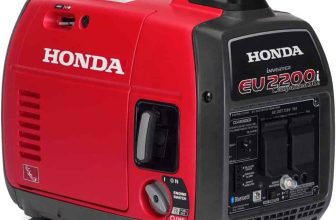
The Honda EU2200i is the premium alternative. It costs much more, but buyers pay for the Honda badge, quieter idle behavior, and strong resale value.
| Spec | Champion 200951 | Champion 200961 dual fuel | Honda EU2200i |
|---|---|---|---|
| Starting/running watts | 2,500 starting / 1,850 running | 2,500 starting / 1,850 running on gasoline; 1,665 running on propane | 2,200 starting / 1,800 running |
| Fuel | Gasoline | Gasoline or propane | Gasoline |
| Runtime | Up to 11.5 hours at 25% load on gasoline | Up to 11.5 hours on gasoline; up to 34 hours at 25% load on a 20-lb propane tank | 3.2-8.1 hours |
| Noise | 53 dBA | 53 dBA | 48-57 dBA |
| Weight | 39 lb dry | 39 lb dry | 47.4 lb |
| CO sensor | No | Not listed in verified specs | Not listed in verified specs |
| Street price class | About $480-$520 | Varies by retailer | About $1,179-$1,299 |
Pick the Champion 200961 if propane storage matters to you. Propane’s shelf life is the real appeal, and Champion’s published figure of up to 34 hours at 25% load on a 20-lb propane tank is a major convenience for camping and emergency storage.
Pick the Honda EU2200i if you want the quieter idle range, the Honda name, and the resale value. Per the provided figures, it gives you 2,200 starting watts and 1,800 running watts at 47.4 lb, but it usually costs about $1,179-$1,299, roughly 2.5x the Champion 200951’s street price.
For most value-focused buyers, the Champion makes more sense. You give up the Honda badge, but the 200951 is lighter, close in running watts, and far cheaper based on current street pricing.
Pros and cons
Pros
- Very light for the class: At 39 lb dry, the Champion 200951 is easy to carry, load, and store.
- Quiet published noise rating: Champion rates it at 53 dBA from 23 feet, which is friendly for camping and tailgating.
- Strong price-to-watt value: Around $480-$520 street for 2,500 starting watts and 1,850 running watts is a solid deal.
- Clean power: Less than 3% THD makes it suitable for laptops, phones, TVs, and other sensitive electronics.
- Useful small-device outlets: You get household outlets, a 12V DC outlet, and a dual-port USB adapter.
- Good warranty support: Champion backs it with a 3-year limited warranty and free lifetime technical support.
Cons
- Only 1,850 running watts: That’s enough for essentials, not a whole-house backup plan.
- 120V only: It won’t power 240V loads.
- No TT-30R RV outlet: RV owners will need to work around the household-style outlet layout.
- No CO sensor: This model lacks Champion’s CO Shield auto-shutoff.
- Recoil start only: There’s no push-button electric start.
- California shipping is restricted: The 200951 is EPA-certified, but at least one major retailer will not ship it to California. If you need a CARB or 50-state unit, look at Champion’s newer CO Shield 2500 line; the dual-fuel 201183 is explicitly sold as 50-state.
Maintenance basics
The Champion 200951 uses a small 79cc OHV engine, so basic maintenance matters. Keep the oil fresh, check the level before use, and don’t run it low; the generator does include low-oil shutdown, but that should be a last defense, not your maintenance plan.
Champion includes oil and a funnel in the box, which helps with initial setup. For oil type guidance by season and generator style, use our guide on what kind of oil a generator uses.
Fuel care is the other big item. Don’t leave untreated gasoline sitting in the tank and carburetor during long storage. Stale fuel is one of the most common reasons small generators refuse to start when the lights go out.
If the generator will sit for months, store it clean, dry, and ready. Our generator winterizing guide covers the storage habits that help keep small engines from turning into garage ornaments.
Run the generator only outdoors with plenty of clearance from doors, windows, vents, campers, and garages. That warning matters even more here because the Champion 200951 does not have a CO sensor.
Bottom line
Buy the Champion 200951 if you want a light, quiet, affordable inverter for camping, tailgating, charging electronics, running a refrigerator, and covering basic outage loads. At 39 lb and around $480-$520, it’s one of the better value buys in the ultralight 2,500W inverter class.
Skip it if you need a 13,500 BTU RV air conditioner, 240V power, a built-in RV 30A outlet, electric start, or CO Shield. If you need AC or more headroom, step up to our guide to the best 3000-watt generators and shop the 3,000-4,500W class instead.
Frequently asked questions
How many watts is the Champion 200951?
The Champion 200951 is rated for 2,500 starting watts and 1,850 running watts. Starting watts cover short motor surges, while 1,850 running watts is the continuous power limit you should plan around.
How long will the Champion 200951 run on a tank of gas?
Champion rates the 200951 for up to 11.5 hours at 25% load on its 1.1-gallon tank. On a 1,850 running-watt generator, 25% load is roughly 460W, so heavier loads will shorten runtime.
How loud is the Champion 200951?
Champion rates the 200951 at 53 dBA from 23 feet. That’s quiet for a portable generator and campground quiet-hours friendly if it’s placed properly and not run under heavy load all night.
Will the Champion 200951 run an RV air conditioner?
No, not a typical 13,500 BTU RV rooftop air conditioner. That size usually needs about 2,800-3,000W surge and 1,300-1,500W running with everything else off, which is too tight for the 200951. RV owners with rooftop AC should shop the 3,000-4,500W class instead.
Is the Champion 200951 CARB compliant or sold in California?
The Champion 200951 is EPA-certified, but at least one major retailer will not ship it to California. Do not assume it is a CARB or 50-state unit. If you need a California-ready option, look at Champion’s newer CO Shield 2500 line; the dual-fuel 201183 is explicitly sold as 50-state.
Can you parallel two Champion 200951 generators?
Yes. The Champion 200951 is parallel-capable with Champion’s optional parallel kit, sold separately. That setup makes sense if you want more output while keeping each generator light enough to carry.
Is the Champion 200951 dual fuel?
No. The Champion 200951 runs on gasoline only. If you want the same ultralight style with propane capability, look at the Champion 200961 dual-fuel sibling.