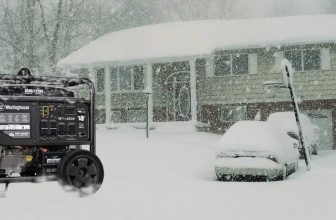
The best generator for Florida hurricane season is the Westinghouse WGen9500DF for most homes: 9,500 running watts on gasoline, dual-fuel flexibility, remote start, and an L14-30R transfer-switch-ready outlet. It also sits under Florida’s permanent sales-tax exemption line for portable engine-driven generators rated at 10,000 running watts or less.
If your Florida home has natural gas service, get the Westinghouse WGen9500TFc instead; it makes 7,500 running watts on natural gas and ships with the natural gas hose and NPT adapter. Condo and townhome owners should look at the Champion 200988 because it’s a quieter inverter with 3,500 running watts on gasoline, 61 dBA published noise, and up to 21 hours at 25% load on a propane bottle.
Florida changes the generator math. NOAA puts the climatological peak of Atlantic hurricane season on September 10, most activity lands from mid-August through mid-October, heat makes a window AC a real survival load, and the state’s 10,000-running-watt tax line rewards the right-size portable.

Why Florida buying is different
Florida hurricane prep has a tighter clock than most national generator lists admit. Per NOAA’s explainer on the peak of hurricane season, the Atlantic season’s climatological peak is September 10, with most activity from mid-August through mid-October.
That timing matters because generator inventory, delivery slots, fuel cans, propane bottles, cords, and inlet gear get harder to sort out as named storms approach. A hurricane generator in Florida should be picked before the track cone points at your county, not after.
Heat is the second Florida-specific issue. Our published wattage calculator figures a 10,000-12,000 BTU window AC at about 1,200 running watts with an 1,800-watt start surge. That’s the sanity-preserving load after a Gulf or Atlantic outage, and every generator on this list can carry it.
Central AC is a different animal. A 3-ton central AC is a 10,000+ watt total load, which pushes you into standby-generator territory instead of the portable-generator picks on this page. For most portable setups, the smarter plan is a window AC, fridge, lights, internet gear, fans, and charging loads.
Natural gas also matters here. Many Florida homes have natural gas service, and a tri-fuel generator can turn that fixed utility connection into the fuel you aren’t hauling after the storm. If you’re considering that route, read our natural gas generator hookup guide before buying the generator, because the quick-connect and installation path should be planned before the first outage.
The last Florida difference is the tax line. Since the state uses running watts, not a price cap, a 9,500-running-watt generator can land in a much better spot than a slightly larger unit. That’s why the Westinghouse WGen9500DF and WGen9500TFc are such strong Florida fits.
Florida’s generator tax break, in plain terms
Florida’s generator sales-tax break is now permanent. Per Florida Department of Revenue TIP 25A01-05, dated July 1, 2025, the exemption took effect August 1, 2025, and covers “portable engine-driven generators capable of producing 10,000 running watts or less.”
The key phrase is running watts. The published line is not a peak-watt number and not a price cap. A generator advertised with a big starting-watt figure can still fit under the Florida line if its running-watt rating is 10,000 or less.
The same permanent exemption list also covers portable gas and diesel cans of 5 gallons or less, Florida Building Commission approved carbon monoxide alarms, AA, AAA, C, D, 6-volt, and 9-volt batteries, waterproof tarps of 1,000 square feet or less, and ground anchor systems or tie-down kits. The statutory reference is Section 46, Chapter 2025-208, Laws of Florida.
Here’s the practical read for this roundup: every generator here except the DuroMax XP13000HXT sits under the published 10,000-running-watt line. The statute and the retailer’s checkout register are the authority; this page is explaining the published line so you can shop with your eyes open.
Best Florida hurricane generators compared
| Model | Running W (gas) | Other fuels | Noise | Under FL’s 10,000W exemption line? | Standout |
|---|---|---|---|---|---|
| Westinghouse WGen9500DF | 9,500 | Propane: 8,500 running W | — | Yes | Best overall Florida hurricane generator |
| Westinghouse WGen9500TFc | 9,500 | Natural gas: 7,500 running W | — | Yes | Best for homes with natural gas service |
| DuroMax XP13000HXT | 10,500 | Propane: 10,000 running W; natural gas: 9,000 running W | — | No — 10,500 running W | Maximum portable tri-fuel power |
| Champion 200988 | 3,500 | Propane: 3,150 running W | 61 dBA | Yes | Condo and townhome essentials pick |
| Westinghouse iGen5000DF | 3,900 | Propane: 3,500 running W | 52 dBA | Yes | Quiet-lot inverter pick |
We compared manufacturer published specs, with several figures checked through GeneratorBible’s database. The table shows why Florida shoppers shouldn’t shop by peak watts alone: the running-watt rating decides both real usable output and the state tax-exemption line.
The big split is fuel and noise. Detached homes that can use a transfer switch should start with the 9,500-running-watt Westinghouse units, natural-gas homes should favor the tri-fuel WGen9500TFc, and tight neighborhoods should look hard at the inverter picks.
Westinghouse WGen9500DF: best overall for Florida
The Westinghouse WGen9500DF is the best generator for Florida hurricane season for most homeowners because it lands in the sweet spot: 12,500 peak watts, 9,500 running watts on gasoline, and 8,500 running watts on propane. That’s enough for a serious emergency panel plan while staying under Florida’s 10,000-running-watt exemption line.
Florida outages are hot, sticky, and often long enough that a tiny generator feels miserable fast. The WGen9500DF has enough published running wattage to handle the window-AC plan that makes a house livable after the storm. A 10,000-12,000 BTU window AC runs about 1,200 watts with an 1,800-watt start surge per our calculator figures, so this unit leaves room for the fridge, lights, fans, charging, and other basics.
The dual-fuel setup is a big reason this Westinghouse beats a gasoline-only unit in Florida. Gas lines get ugly after landfall, while propane gives you a shelf-stable fallback that can sit ready before the cone turns serious. Westinghouse publishes up to 12 hours on the 6.6-gallon gasoline tank at 25% load and up to 7 hours at 50% load on a 20 lb propane tank.
The L14-30R outlet is the right direction for a cleaner storm setup. You still need the proper transfer equipment installed the right way, but this generator is built for that path instead of a nest of cords through a cracked door. Remote start is a practical win during a wet, humid cleanup week, as long as the unit is already placed safely outdoors.
The WGen9500DF is not the quiet-neighborhood pick, and it’s not the answer for a 3-ton central AC. But for a Florida homeowner who wants a strong portable generator without crossing the state’s 10,000-running-watt line, this is the best overall fit.
Check the Westinghouse WGen9500DF price on Amazon →
Westinghouse WGen9500TFc: best for natural-gas homes
The Westinghouse WGen9500TFc is the Florida pick for homes with natural gas service. It gives you the same 12,500 peak and 9,500 running watts on gasoline as the WGen9500DF, plus a natural-gas rating of 9,500 peak watts and 7,500 running watts per Westinghouse’s published figures.
The big appeal is not hauling fuel every day after a storm. Gasoline storage has limits, propane bottles help, but natural gas gives you a fuel path that isn’t based on what’s left at the store. For South Florida neighborhoods, Gulf Coast subdivisions, and inland homes with gas service, that can be the cleanest long-outage strategy.
Westinghouse also includes the hardware that matters: the WGen9500TFc ships with a propane hose and a natural gas hose with an NPT adapter. That does not replace a proper hookup plan, but it makes the generator package more complete than units that leave you chasing fittings during storm week. Use the natural gas hookup guide mentioned earlier to plan the quick-connect install path before the season gets busy.
It also has a CO sensor and remote start. The CO sensor is not permission to run it near the house, under a lanai, or in a garage, but it is a useful safety layer on a machine that may be running through the uncomfortable days after landfall.
At 9,500 running watts on gasoline, the WGen9500TFc also sits under Florida’s 10,000-running-watt exemption line. If you want to compare it against other gas, propane, and natural-gas machines, our best tri-fuel generators roundup is the next stop.
Check the Westinghouse WGen9500TFc price on Amazon →
DuroMax XP13000HXT: maximum power with a tax-line tradeoff
The DuroMax XP13000HXT is the muscle pick in this Florida roundup. DuroMax publishes 13,000 peak watts and 10,500 running watts on gasoline, 12,500 peak and 10,000 running watts on propane, and 11,250 peak and 9,000 running watts on natural gas.
That extra gasoline output is the reason to buy it and the reason to pause. At 10,500 running watts on gasoline, the XP13000HXT sits above Florida’s 10,000-running-watt exemption line. The extra muscle costs you the tax break, and there’s no reason to hide that.
For some Florida homes, the tradeoff can still make sense. If your emergency panel is heavier, your starting loads are tougher, or you want more margin on propane and natural gas, the DuroMax gives you more headroom than the 9,500-running-watt class. Just don’t buy it assuming it fits under the Florida portable-generator line.
The tri-fuel setup is strong. DuroMax includes the natural gas hose and quick-connect fittings in the box, which helps if your plan is to run on natural gas after the storm and keep gasoline or propane as fallback fuels. The published 9,000 running watts on natural gas is a serious number for a portable unit.
DuroMax also lists CO Alert, a 500cc engine, and a 5-year residential warranty. If you’re prioritizing maximum portable power over the tax exemption, this is the pick; if the exemption is part of your buying math, step back down to the Westinghouse WGen9500TFc.
Check the DuroMax XP13000HXT price on Amazon →
Champion 200988: condo and townhome essentials pick
The Champion 200988 is the Florida condo and townhome pick because it solves a different problem than the big open-frame generators. It’s a dual-fuel inverter with 4,500 starting watts, 3,500 running watts on gasoline, and 3,150 running watts on propane.
That is not a whole-home-lite machine. It is the generator for a refrigerator, a window AC plan, fans, lights, phones, a router, and small electronics when space and noise matter. It also stays well under Florida’s 10,000-running-watt exemption line.
Champion publishes 14 hours at 25% load on 2.3 gallons of gasoline and 21 hours at 25% load on a 20 lb propane bottle. For a condo owner who does not want to store much gasoline, that propane runtime is the headline. A 20 lb propane bottle is 4.7 gallons properly filled, and propane stores indefinitely.
The inverter output is another reason this model fits smaller Florida setups. Champion lists less than 3% THD, plus TT-30R and USB outlets. That makes it friendlier for electronics than a conventional jobsite-style generator.
Noise is the last piece. Champion’s published figure is 61 dBA, which won’t make it silent, but it’s far easier to justify in a tighter living setup than a big open-frame generator. You still need to follow your condo, townhome, HOA, and local rules, and you still need safe outdoor placement.
Check the Champion 200988 price on Amazon →
Westinghouse iGen5000DF: quiet-lot inverter pick
The Westinghouse iGen5000DF is the quiet-neighborhood pick for Florida homeowners who have tight lots, HOA pressure, or nearby bedrooms. Westinghouse publishes 3,900 running watts on gasoline, 3,500 running watts on propane, and 52 dBA noise.
That 52 dBA figure is the reason this unit belongs here. If you plan to run at night in a dense neighborhood after a storm, noise can become the issue that gets the generator shut down. The iGen5000DF gives you useful emergency wattage without jumping to the louder open-frame class.
Like the Champion, this is an essentials generator, not a central-AC solution. It can support the window-AC strategy, refrigeration, fans, lights, charging, and internet gear if you manage loads. It is also under Florida’s 10,000-running-watt exemption line by a wide margin.
The dual-fuel design matters in hurricane country. Gasoline works when you can get it, and propane gives you a cleaner storage path before the season ramps up. For a quiet-lot Florida buyer, that mix is more useful than chasing maximum wattage.
Pick the iGen5000DF over the Champion if published noise is your top priority and you want the quietest model in this roundup. Pick the Champion if the 21-hour propane runtime at 25% load is the deciding spec.
Check the Westinghouse iGen5000DF price on Amazon →
Florida operating realities
A hurricane generator in Florida is only useful if you can run it safely after the eyewall leaves. CPSC says portable generators belong outdoors only, at least 20 feet from the home, with exhaust pointed away from openings. Never run one in a garage, under a lanai, in a breezeway, or in any enclosed or partly enclosed space, even with doors open.
That warning is not theoretical. CPSC attributes nearly 100 portable-generator carbon monoxide deaths a year, and those deaths cluster in the days after storms. The dangerous window is often cleanup week, when people are tired, hot, and tempted to move the generator closer.
Rain bands are the second Florida reality. You need a setup that keeps the generator out of standing water, away from openings, and protected from direct weather without trapping exhaust. Our guide to running a generator during and after a hurricane walks through that operating plan.
Fuel planning is where many Florida buyers underbuy. Our published cluster math puts a 9,500W-class unit at about 6.6 gallons per day at 25% load when running 12 hours per day. That is why Florida’s exemption for gas cans of 5 gallons or less matters, and why propane and natural gas paths can take pressure off your stored gasoline plan.
Propane stores indefinitely, and a 20 lb bottle is 4.7 gallons properly filled. Gasoline needs more planning, more rotation, and more safe storage discipline. Use our hurricane fuel-storage math before the storm, not during the outage.
Sizing is the last check before you buy. If your goal is a window AC, fridge, lights, fans, and charging, the generator choices on this page make sense. If your goal is central AC, start with our hurricane generator sizing guide and then verify your own loads with the generator wattage calculator.

Bottom line
Buy the Westinghouse WGen9500DF if you want the best whole-home-lite Florida hurricane generator under the state’s 10,000-running-watt exemption line. Buy the WGen9500TFc if your home has natural gas, the DuroMax XP13000HXT if maximum power matters more than the tax break, the Champion 200988 for condo and townhome essentials, and the Westinghouse iGen5000DF for the quietest tight-lot pick here.
For a broader national comparison, use our best generators for hurricane season guide. Florida shoppers should move before the September 10 NOAA climatological peak, because the best generator is the one bought, installed, fueled, and staged before the track cone points at your coast.
Frequently asked questions
What is the best generator for Florida hurricane season?
The Westinghouse WGen9500DF is the best pick for most Florida homes because it has 9,500 running watts, dual-fuel capability, and an L14-30R transfer-switch-ready outlet. Natural-gas homes should choose the Westinghouse WGen9500TFc for its 7,500 running watts on natural gas. Condo and townhome owners should look at the Champion 200988 because it is an inverter with 3,500 running watts on gasoline and 61 dBA published noise.
Are generators tax-free in Florida?
Per Florida DOR TIP 25A01-05, Florida permanently exempts portable engine-driven generators capable of producing 10,000 running watts or less from sales tax starting August 1, 2025. The same published permanent exemption list includes gas and diesel cans of 5 gallons or less, approved carbon monoxide alarms, AA, AAA, C, D, 6-volt, and 9-volt batteries, and waterproof tarps of 1,000 square feet or less. The statute and the retailer’s register are the final word.
What size generator do I need for a Florida house?
For a non-central-AC hurricane plan, 4,500 to 9,500 running watts can cover a window AC, refrigerator, fans, lights, charging, and other essentials if you manage loads. A 10,000-12,000 BTU window AC runs about 1,200 watts with an 1,800-watt start surge. A 3-ton central AC is a 10,000+ watt total load, which is standby-generator territory.
Is a tri-fuel generator worth it in Florida?
Yes, if your Florida home has natural gas service. The Westinghouse WGen9500TFc makes 7,500 running watts on natural gas, and the DuroMax XP13000HXT makes 9,000 running watts on natural gas. Gasoline and propane remain useful fallbacks, but natural gas removes the stored-fuel ceiling for many outage plans.
Can I run my generator during the actual hurricane?
Only if it can run outdoors, at least 20 feet from the home, protected from direct weather, on high ground, and with exhaust pointed away from openings. Never run a generator in a garage, under a lanai, or in any enclosed or partly enclosed space. CPSC says nearly 100 portable-generator CO deaths happen each year, clustering in the days after storms.
When should Floridians buy a generator?
Buy before the September 10 climatological peak of Atlantic hurricane season. NOAA says most activity runs from mid-August through mid-October, and supply, shipping, fuel cans, propane bottles, and installation help tighten as storms approach. The right time to buy is before a named storm is aimed at Florida.