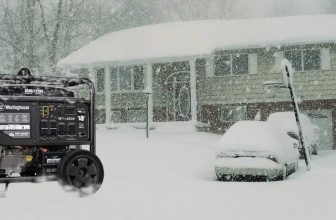
Buy the Westinghouse WGen9500DF if you want one portable machine for the whole storm season: 9,500 running watts on gas, dual fuel, remote start, and a transfer-switch-ready L14-30R outlet. The Westinghouse WGen7500DF is the value cut, and the Westinghouse iGen5000DF is the quiet one.
NOAA’s May outlook calls for a below-normal 2026 Atlantic hurricane season, with 8-14 named storms, 3-6 hurricanes, and 1-3 major hurricanes. That forecast does not matter much if one landfall crosses your county, and late July is the last comfortable buying window before the mid-August-through-October peak.
Every headline portable pick here is dual fuel on purpose, except the Honda EU7000iS and the Generac Guardian standby. After a storm, gasoline is the weak link because stations need power to pump, while propane tanks store indefinitely and swap fast.
If you’re still choosing between a portable unit and a whole-house standby, read our breakdown of portable vs. standby generators before you spend the money. For most homeowners, the right portable dual-fuel unit plus a legal transfer setup is the practical middle ground.
Why dual fuel is the hurricane play
Gasoline generators work fine until the gas line starts. Storm outages often knock out power to stations, and even open stations can run dry when every neighbor is filling cans at the same time.
Propane solves a different problem. A standard 20-lb propane tank is about 4.7 gallons equivalent, stores indefinitely, and can be swapped in seconds if stores are open. That makes propane the best backup fuel to keep at home before the first landfall headline.
Dual fuel also lets you stretch whatever fuel you can get. Run gasoline when you have fresh cans, switch to propane when the gas supply gets ugly, and save one fuel type for overnight or medical-priority loads.
Propane is not magic. Big open-frame generators burn through 20-lb tanks fast under load, especially if you’re running a well pump, freezer, fridge, and window AC. Still, having both fuels gives you more ways to keep the house livable for days instead of hours.
For more propane-specific options, see our guide to the best propane generators. This page focuses on hurricane readiness, where fuel flexibility matters as much as raw wattage.
Best hurricane generator comparison
| Model | Running W gas/LP | Fuel | Noise | Start | Standout |
|---|---|---|---|---|---|
| Westinghouse WGen9500DF | 9,500 / 8,500 | Gasoline or propane | — | Remote start | Best overall storm-season portable |
| DuroMax XP12000EH | 9,500 / 8,075 | Gasoline or propane | — | — | Max-power dual fuel |
| Westinghouse WGen7500DF | 7,500 / 6,750 | Gasoline or propane | 72 dBA | Remote fob start | Best value whole-home-lite pick |
| Westinghouse iGen5000DF | 3,900 / 3,500 | Gasoline or propane | 52 dBA | — | Quiet inverter for nights and electronics |
| Champion 200988 | 3,500 / 3,150 | Gasoline or propane | 61 dBA | — | Budget dual-fuel inverter |
| Honda EU7000iS | 5,500 (gas only) | Gasoline | 52-60 dBA | — | Premium quiet whole-home-lite inverter |
| Generac Guardian 22kW | 19,500 NG / 22,000 LP | Natural gas or propane | 67 dBA | Automatic | Never-touch-it standby option |
Westinghouse WGen9500DF: best overall hurricane generator
The Westinghouse WGen9500DF is the best overall portable generator for hurricane season because it hits the useful middle: 9,500 running watts on gasoline, 8,500 running watts on propane, remote start, and a transfer-switch-ready L14-30R outlet. It has enough output for fridge, freezer, a pump load, window AC, lights, and charging with sensible load management.
Westinghouse’s published figures list 12,500 starting watts and 9,500 running watts on gas, plus 11,200 starting watts and 8,500 running watts on propane. That is the range where a portable unit starts feeling like real house backup instead of an extension-cord panic plan.
The propane runtime is the honest catch. The WGen9500DF is listed around 7 hours at 50% load on a 20-lb tank, so it is not a “set it and forget it” machine on grill bottles. Plan multiple tanks, or use propane as your second fuel while rotating gasoline.
GeneratorBible lists THD under 23% for this model. That is fine for fridges, pumps, freezers, fans, and tools, but use a UPS or an inverter generator for sensitive electronics if you care about cleaner power.
This is the pick for homeowners who want the strongest portable answer before shelves get thin. If your storm plan includes a legal transfer switch or interlock, the WGen9500DF is the one I’d buy first.
Check the Westinghouse WGen9500DF price on Amazon →
DuroMax XP12000EH: max-power dual fuel
The DuroMax XP12000EH is the muscle pick when you want more starting wattage for hard pump loads. Per GeneratorBible, it is rated at 12,000 starting watts and 9,500 running watts on gas, with 10,200 starting watts and 8,075 running watts on propane.
The 457cc engine gives this unit the feel of a jobsite brute, not a quiet campground inverter. That is good if your main concern is starting a well pump, keeping cold storage alive, and running bigger household loads with discipline.
The propane side needs planning. GeneratorBible lists about 3.5 hours at 50% load per 20-lb tank, which means small tanks disappear fast. Feed it 40-lb tanks if you expect to run on propane for long stretches.
The XP12000EH belongs on the shortlist if you’ve been shopping the best 12000 watt generator class and want hurricane fuel flexibility. It is more generator than many homes need, but that extra surge room can matter with pumps.
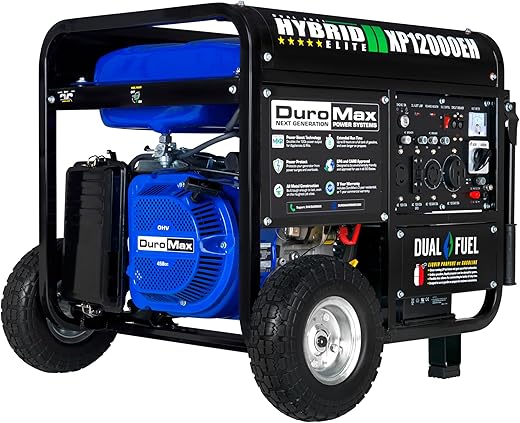
DuroMax XP12000EH Generator-12000 Watt Gas or Propane Powered Home Back Up & RV Ready, 50 State Approved Dual Fuel Electric Start Portable Generator, Black and Blue
Check the DuroMax XP12000EH price on Amazon →
Westinghouse WGen7500DF: best value whole-home-lite generator
The Westinghouse WGen7500DF is the value pick for homeowners who want serious outage coverage without jumping to the largest portable frames. Westinghouse lists 9,500 starting watts and 7,500 running watts on gasoline, plus 8,550 starting watts and 6,750 running watts on propane.
That output is enough for a practical hurricane circuit plan: fridge, freezer, lights, fans, charging, and one major comfort or water load at a time. If you have a well pump, this is where load management becomes mandatory, not optional.
The spec sheet is strong for the money. Westinghouse lists a 420cc engine, a 6.6-gallon fuel tank with up to 11 hours of gas runtime, up to 8 hours on a 20-lb propane tank, 194 lb weight, 72 dBA noise, remote fob start, 2x GFCI 5-20R duplex outlets, an L14-30R outlet, and a 3-year warranty.
The WGen7500DF is the right choice if the WGen9500DF feels like overkill or costs too much. It gives up wattage, but it keeps the features that matter in a storm: dual fuel, remote start, and transfer-ready output.
Westinghouse Outdoor Power Equipment 9500 Peak Watt Dual Fuel Home Backup Portable Generator, Remote Electric Start, Transfer Switch Ready, Gas & Propane Powered, CARB Compliant
Check the Westinghouse WGen7500DF price on Amazon →
Westinghouse iGen5000DF: quiet inverter dual fuel
The Westinghouse iGen5000DF is the quiet storm generator for people who do not need to run half the house. Westinghouse rates it at 5,000 starting watts and 3,900 running watts on gasoline, with 4,500 starting watts and 3,500 running watts on propane.
The big reason to buy it is noise and power quality. At 52 dBA, it is much more neighbor-friendly than an open-frame unit, and as an inverter it is the better fit for phones, laptops, routers, and sensitive electronics.
This is not the pick for a big well pump plus window AC plus freezer plus microwave all at once. It is the pick for fridge, fans, charging, lights, and small comfort loads while everyone else listens to loud open-frame units at night.
If you want this type of cleaner, quieter storm backup, compare it with the options in our guide to the best dual fuel inverter generator. In hurricane country, an inverter is often the better second generator if you already own a larger open-frame unit.
Check the Westinghouse iGen5000DF price on Amazon →
Champion 200988: budget dual-fuel inverter
The Champion 200988 is the budget dual-fuel inverter for basic hurricane insurance. Champion’s published figures list 4,500 starting watts and 3,500 running watts on gasoline, with 3,150 running watts on propane.
At 61 dBA, it is not as quiet as the iGen5000DF, but it is still much more civilized than a large open-frame portable. It is also RV-ready, which makes it useful for homeowners who split storm prep between the house and a camper.
Think of this as a one-fridge-and-essentials generator. It can keep food cold, run fans, charge phones, and handle basic loads, but it is not the machine I’d choose for a well pump or a broad transfer-panel plan.
The Champion makes sense if your budget is tight and the alternative is having nothing before the first storm watch. Just be honest about load size, especially if you are trying to run AC or pump equipment.

Champion Power Equipment 200988 4500-Watt Dual Fuel RV Ready Portable Inverter Generator, Electric Start
Check the Champion 200988 price on Amazon →
Honda EU7000iS: premium quiet whole-home-lite generator
The Honda EU7000iS is the premium gasoline-only inverter pick. Honda rates it at 7,000 starting watts and 5,500 running watts, with a fuel-injected GX390 engine, 5.1-gallon tank, 6.4-16 hours of runtime by load, 52-60 dBA noise, and 263.2 lb weight.
The EFI engine is the reason this Honda stands out for storm prep. Fuel injection means no carburetor gumming between storms, which matters when a generator may sit for long stretches and then need to start immediately.
The tradeoff is fuel. This is not a dual-fuel generator, so you are tied to gasoline at the exact time gas stations may be down or overwhelmed. If you buy the Honda, store fuel correctly and rotate it on schedule.
One update from older buying advice: the Honda EU7000iAT1 recommended on the old page is discontinued. The current EU7000iS is the model to shop now.
Check the Honda EU7000iS price on Amazon →
Generac Guardian 22kW: the never-touch-it standby option
The Generac Guardian 22kW is the answer if you want backup power to start itself even after you have evacuated. Generac lists 22,000 watts on propane and 19,500 watts on natural gas, with 67 dBA noise, a Wisconsin-built G-Force engine, a 200A automatic transfer switch, Wi-Fi, and a 5-year warranty.
This is not a portable generator. It is a professionally installed standby system tied into your home electrical system and fuel supply. That install can add thousands more, so get quotes before you compare it directly against a portable unit.
The Guardian is the best choice for homeowners with medical loads, frequent outages, or a low tolerance for extension cords and fuel runs. It is also the easiest choice to live with if you evacuate and still want the house protected.
The downside is timing. Standby installs take planning, permitting, and contractor availability. If you are shopping in late July, portable inventory may solve this season faster, while standby quotes may be the smarter long-term move.

Generac 7043 22kW Air Cooled Guardian Series Home Standby Generator - 200-Amp Transfer Switch - Comprehensive Protection - Smart Controls - Versatile Power - Real-Time Updates
Check the Generac Guardian 22kW price on Amazon →
Sizing for a multi-day outage
Start with the loads that protect the house and food. Use 700W for a fridge with 2,200W surge, and put a chest freezer in a similar class. Phone and laptop charging is trivial compared with motors and compressors.
Pumps are the surge monsters. Well pumps commonly run 1,000-2,000W and can need 2-3x that at startup, so size for the pump first if your water depends on it. Sump pumps deserve the same respect if flooding is part of your storm risk.
Window AC usually lands between 500-1,500W, fans are about 200W, and a microwave is 1,000W. You can run many of these loads from a mid-size generator, but not all at once without planning.
A 7,500-9,500W running unit covers fridge, freezer, well pump, window AC, and lights with load management. That means you may shut off the AC before starting the microwave, or let the well pump recover before adding another compressor load.
Smaller inverters still earn their place. A 3,500W propane-running inverter can keep essentials alive quietly, especially overnight, but it is not a substitute for a larger unit if you have water pumps or bigger AC loads.
Noise and neighbor reality
Noise matters after the first night. The iGen5000DF at 52 dBA, Honda EU7000iS at 52-60 dBA, Champion 200988 at 61 dBA, Generac Guardian at 67 dBA, and WGen7500DF at 72 dBA are very different machines to live beside.
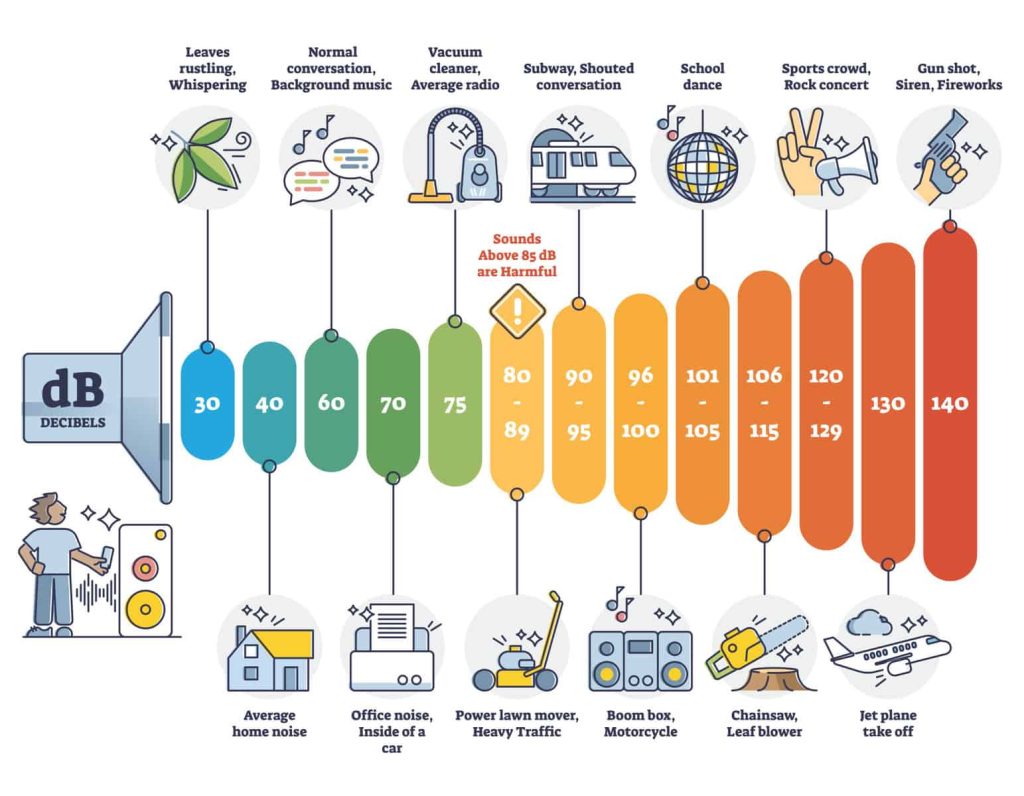
If you have close neighbors, a quiet inverter for night duty is worth considering even if you also own a larger open-frame generator. Run the big unit for pumps, cooling, and freezer recovery, then switch to the quiet unit for fans, fridge cycles, and charging.
Fuel plan: how much to store
Propane planning starts with runtime, not hope. A 20-lb tank is about 4.7 gallons equivalent, and large generators can drain one faster than new owners expect.
The WGen9500DF is listed around 7 hours at 50% load on a 20-lb tank. For a full day of continuous running, the arithmetic is 24 ÷ 7 = about 3.4 tanks per day, before you add safety margin.
The WGen7500DF is listed up to 8 hours on a 20-lb propane tank. That math is 24 ÷ 8 = 3 tanks per day if you run continuously.
The DuroMax XP12000EH is listed around 3.5 hours at 50% load per 20-lb tank. That is 24 ÷ 3.5 = about 6.9 tanks per day, which is why 40-lb tanks make more sense for that class.
For the iGen5000DF and Champion 200988, we haven’t verified a comparable 20-lb-tank runtime figure, so do not guess. Use the owner’s manual, your expected load, and a conservative plan; our guide to how much propane a generator uses explains the math in more detail.
Gasoline needs rotation. Honda says gasoline can degrade in 30 days, while STA-BIL says treated fuel can last up to 24 months. Use stabilizer, label cans, rotate them into vehicles or equipment, and refill before storm watches start.
The right fuel plan is not “one full tank.” It is enough stored fuel for the first stretch, plus a plan to reduce runtime by cycling loads instead of running everything around the clock.
Run it without killing anyone
Portable generator exhaust kills after storms. Follow CDC-style placement rules: run the generator 20+ feet from the house, point exhaust away from windows, doors, and vents, and never run it in a garage, even with the door open.
Do not run it on a porch. Do not run it under a carport attached to the house. Do not place it where exhaust can drift into a crawlspace, attic vent, soffit, or open window.
CO shutoff systems such as CO Shield or CO-MINDER are good backups, but they do not replace correct placement. Treat them like a seat belt, not a license to do something unsafe.
Put battery CO alarms in the house before the storm, especially near sleeping areas. If an alarm sounds, get people outside first and troubleshoot the generator only after everyone is safe.
Electrical safety matters too. Use a transfer switch or approved interlock if you are feeding home circuits, and never backfeed a dryer outlet or range outlet. Backfeeding can kill line workers and destroy equipment.
If you need a deeper safety refresher, read our guide on preventing carbon monoxide poisoning before the generator ever comes out of the box.
Prep checklist before the first watch
Do the boring work now, while stores still have parts. Buy oil, spare filters, the correct cords, and any transfer hardware your electrician specifies. A generator without the right cord is just an expensive engine in the driveway.
Run the generator monthly. Confirm it starts on gasoline and propane if it is dual fuel, and make sure the battery is charged if it has electric or remote start.
Fill propane tanks before the first watch. Rotate gasoline cans, treat fuel, and keep cans stored safely. Do not wait until the cone shifts toward your county.
Build your load plan on paper. Mark which circuits or appliances matter first: fridge, freezer, well pump or sump pump, fans, window AC, lights, and charging. Decide what gets shut off before the microwave runs.
Freeze water jugs ahead of landfall. They help the freezer ride through generator cycling, and they become drinking or wash water if the outage stretches.
Charge phones, power banks, radios, tool batteries, and medical-device backups before conditions get bad. Our generator emergency preparedness checklist covers the rest of the storm-week setup.
The complete hurricane generator library
This guide is the hub. When you’re ready to go deeper on any single piece of the storm plan, each of these guides covers one job in full:
- Hurricane generator checklist: 21 things to do before the storm
- What size generator you need for a hurricane
- How much fuel to store for a hurricane (gas + propane math)
- How long a 20 lb propane tank runs a generator
- Running a generator during and after a hurricane: rain, flood and CO safety
- Generator won’t start after sitting? 9 fixes before the storm
- How to hook up a tri-fuel generator to natural gas
- Best emergency generators under $1,000
- Best generators for Florida hurricane season
- Best solar generators for indoor-safe backup
Bottom line
For most hurricane-season buyers in late July 2026, the Westinghouse WGen9500DF is the best portable pick: 9,500 running watts on gas, 8,500 running watts on propane, remote start, and transfer-ready output. It has the best mix of power, fuel flexibility, and practical home coverage.
Buy the WGen7500DF if you want the better value, the iGen5000DF if quiet overnight power matters most, or the Generac Guardian 22kW if you want automatic standby power and are ready for professional installation. NOAA’s 2026 outlook is below-normal, but one landfall is enough, and buying after the watch is posted is how you end up overpaying or finding empty shelves.
Frequently asked questions
What size generator do I need for a hurricane?
Most homes should look at a 7,500-9,500W running portable generator if they want fridge, freezer, well pump, window AC, and lights with load management. A fridge is about 700W with 2,200W surge, while well pumps commonly run 1,000-2,000W and can need 2-3x surge.
Is 2026 supposed to be a bad hurricane season?
NOAA’s May 2026 outlook forecasts a below-normal Atlantic season: 8-14 named storms, 3-6 hurricanes, and 1-3 major hurricanes. The season still runs June 1-November 30, and a quiet forecast does not help if one storm lands over your county.
Why dual fuel for hurricanes?
Dual fuel gives you gasoline and propane options after a storm. Gas stations need power to pump, while 20-lb propane tanks store indefinitely and swap quickly, so every main portable pick here is dual fuel on purpose.
How much propane should I store?
Use runtime math. The WGen9500DF is about 7 hours at 50% load on a 20-lb tank, or about 3.4 tanks per full day of continuous running; the WGen7500DF is up to 8 hours, or 3 tanks per day. The DuroMax XP12000EH is about 3.5 hours at 50% load per 20-lb tank, so plan around larger 40-lb tanks if you choose that class.
Can I run a generator in the rain?
You need to keep the generator dry while also keeping exhaust safely away from the house. Use a proper open-air generator canopy or covered setup that does not trap exhaust, and never move the unit into a garage, porch, or enclosed area to protect it from rain.
How far should a generator be from the house?
Follow CDC-style placement: run it 20+ feet from the house with exhaust pointed away from windows, doors, and vents. Never run it in a garage, even with the door open, and use battery CO alarms inside the house.
Portable or standby for hurricane country?
A portable dual-fuel generator is cheaper and faster to buy before this season’s peak, but it requires fuel handling, setup, and manual operation. A standby generator like the Generac Guardian 22kW starts automatically and can run when you have evacuated, but professional installation costs thousands more and requires quotes.