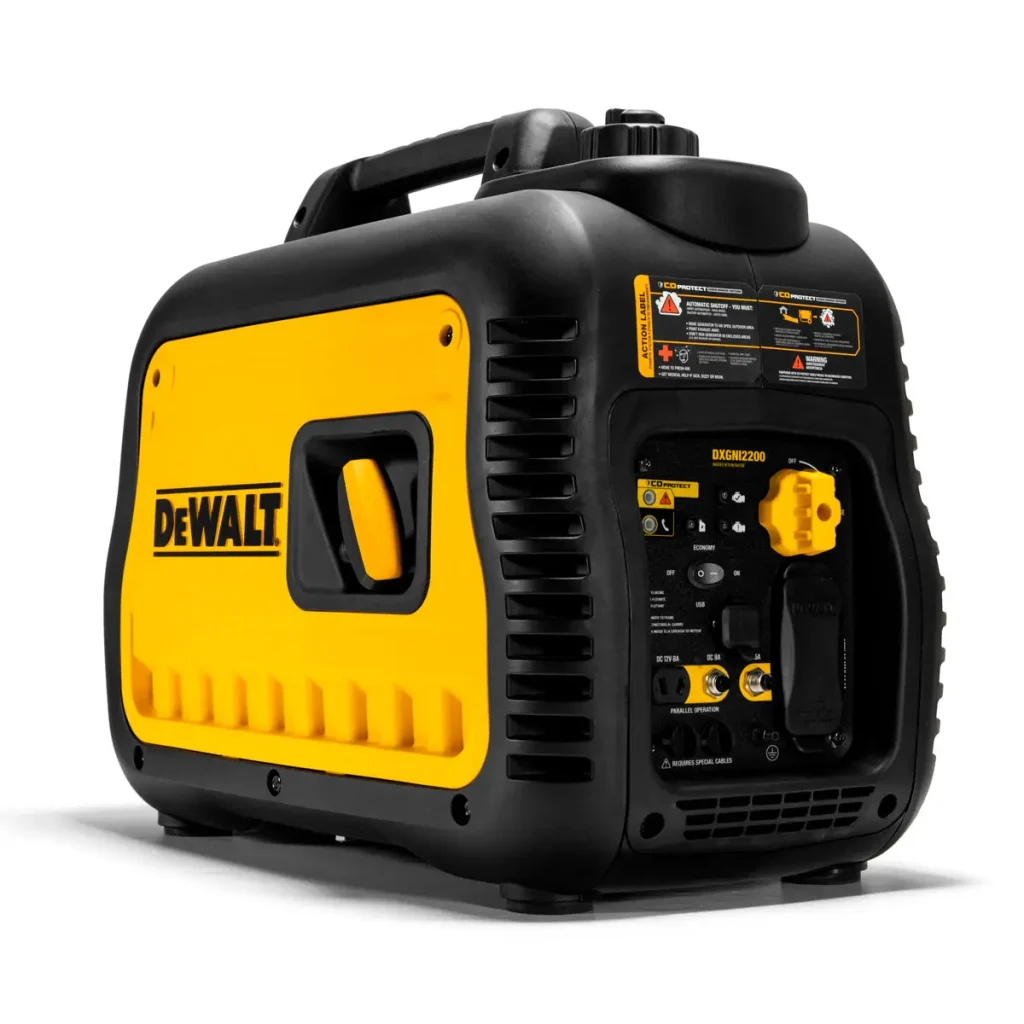
The DeWalt DXGNi2200 is a legitimately good 2,200-watt suitcase inverter, and its GFCI-protected outlets plus CO-Protect shutdown make it the safety pick in the mid-price class. The trade-offs are 1,700 running watts, which is a touch below the Honda EU2200i’s 1,800 running watts, and spotty stocking that can make the price swing hard.
If you’re comparing the yellow DeWalt against the Honda EU2200i and cheaper Champion models, the DXGNi2200’s real niche is clear: cleaner jobsite-style protection in a compact inverter. It’s still listed as current on DeWalt’s site as of July 2026 under SKU PMC172200, so don’t confuse it with the discontinued DXGN6000.

Check the DeWalt DXGNi2200 price on Amazon →
DeWalt DXGNi2200 specs at a glance
The DXGNi2200 is a 120V inverter generator built around an 80cc OHV 4-stroke engine with recoil start. DeWalt lists the model as PMC172200, and the spec set lines up with dealer sheets and GeneratorBible data checked July 2026.
| Spec | DeWalt DXGNi2200 / PMC172200 |
|---|---|
| Starting watts | 2,200 watts |
| Running watts | 1,700 watts |
| Voltage | 120V |
| Engine | 80cc OHV 4-stroke |
| Start type | Recoil start |
| Tank size | 1 gallon |
| Runtime | Up to 11 hours at 25% load; about 6 hours at 50% load |
| Noise | 60 dBA per GeneratorBible |
| Dry weight | 49 lb |
| AC outlets | Two duplex 120V 20A 5-20R GFCI-protected outlets |
| DC and USB | 12V 8A DC and 5V USB |
| THD | Under 3% |
| Carbon-monoxide shutdown | CO-PROTECT |
| Parallel capable | Yes, cable sold separately |
| Emissions | CARB and EPA, 50-state |
| Warranty | 3 years |
| Published/list pricing | $699 list per GeneratorBible; street listings roughly $550-$700 when stocked, with some retailers above $900 |
That’s a strong feature list for a compact inverter, especially the GFCI protection. Most suitcase inverters focus on camping, tailgating, and backup electronics; this one leans harder toward wet grass, extension cords, and jobsite habits.
What can 1,700 running watts handle?
The DXGNi2200 gives you 1,700 running watts to work with after startup. That’s enough for a basic emergency setup, a light RV load, or a small tool-and-charger station, but it’s not a whole-house generator and it’s not the right size for a big RV air conditioner.
For a home outage, think in terms of a refrigerator around 700 watts, phone chargers, lights, a TV, and a box fan. You’ll want to stagger loads instead of plugging everything in at once, especially if a motor load is starting.
A 1,000-watt microwave can run briefly, but use it with other loads turned off. If the fridge is cycling and the microwave starts at the same time, you can run out of headroom fast on a 1,700-watt inverter.
The 25% runtime rating also tells you what DeWalt means by “light load.” A 25% load on 1,700 running watts is about 425 watts, so the claimed up-to-11-hour runtime is based on sipping power, not running a kitchen’s worth of gear.
For RV owners, this is a good fit for battery charging, small appliances used one at a time, lights, a TV, and fans. It is not the right pick for a 13.5k BTU RV air conditioner by itself; for that, shop the 3,000-4,500W class or plan a proper parallel setup.
If you’re still sorting out the size class, our best inverter generators guide gives you the bigger market view. The short version: 2,200 starting watts is portable and efficient, but it demands load discipline.
The GFCI outlets and CO-Protect: the safety story
The standout feature on the DeWalt DXGNi2200 is the outlet panel. DeWalt gives it two duplex 120V 20A 5-20R GFCI-protected outlets, plus 12V 8A DC and 5V USB.
GFCI protection matters outdoors because ground faults happen around wet cords, damp soil, metal tool housings, and sloppy temporary power runs. A GFCI trips when it detects current leaking where it shouldn’t, which can reduce shock risk in the exact places portable generators usually get used.
That doesn’t make this a magic jobsite approval slip, and we’re not calling it OSHA certified. It does give the DXGNi2200 a jobsite-minded feature that many suitcase inverters skip.
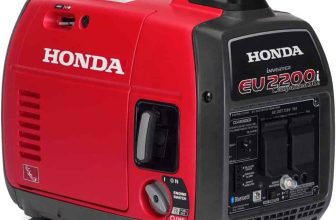
The Honda EU2200i is the obvious premium comparison, but Honda’s consumer EU2200i does not have GFCI outlets. Honda’s GFCI jobsite answer is the EB2200i, which we cover separately in our Honda EB2200i review.
CO-Protect is the other major safety feature. DeWalt’s carbon-monoxide sensor is designed to shut the generator down if dangerous CO conditions are detected around the unit.
You still have to run any portable generator outside, away from openings, and never in a garage. CO-Protect is a backup layer, not permission to run the machine in a bad location.

Noise and economy mode
GeneratorBible lists the DXGNi2200 at 60 dBA. That’s normal-conversation territory and much quieter than an open-frame generator, but it trails the Honda EU2200i’s published 48-57 dBA range and the Champion 200951’s 53 dBA figure at 23 ft.
The DeWalt uses auto throttle, also called economy mode, to reduce engine speed when demand is low. That helps cut fuel use and noise when you’re charging batteries, running lights, or powering light electronics instead of pulling hard on the inverter.
Don’t expect economy mode to make a small engine disappear. When a heavier appliance starts, the engine has to ramp up, and the sound changes with the load.
The under-3% THD rating is the part electronics owners should care about. That clean sine wave is the reason this class of inverter works well for laptops, phones, TVs, routers, and battery chargers compared with rougher open-frame units.
Runtime and fuel
The DXGNi2200 uses a 1-gallon fuel tank. DeWalt’s published runtime is up to 11 hours at 25% load, and the 50% load figure is about 6 hours.
Again, 25% load on 1,700 running watts works out to about 425 watts. At that level, the DXGNi2200 is doing light-duty work: charging, lights, a fan, or a fridge cycling part of the time.
The light-load fuel burn works out to about 0.09 gallons per hour on average. That’s the good side of a small inverter: you’re not feeding a big engine just to keep a few essentials alive.
The trade-off is tank size. A 1-gallon tank keeps the unit compact, but you’ll be refueling more often than you would with a larger-tank machine, and the Champion 200951 carries a 1.1-gallon tank.
For overnight emergency use, the DeWalt makes sense if your load is modest. If you’re running closer to 50% load, plan around the shorter runtime instead of the headline 11-hour figure.
DXGNi2200 vs Honda EU2200i vs Champion 200951
The DeWalt is best understood between the Honda and Champion, not as a direct copy of either one. It costs less than the Honda in normal street listings, costs more than the Champion value play, and brings a safety-heavy outlet panel that neither consumer comparison matches.
| Feature | DeWalt DXGNi2200 | Honda EU2200i | Champion 200951 |
|---|---|---|---|
| Starting / running watts | 2,200 / 1,700 | 2,200 / 1,800 | 2,500 / 1,850 |
| Weight | 49 lb dry | 47.4 lb | 39 lb |
| Noise | 60 dBA per GeneratorBible | 48-57 dBA | 53 dBA at 23 ft |
| GFCI outlets | Yes, GFCI-protected 5-20R outlets | No on the consumer EU2200i | Not the DeWalt’s GFCI setup |
| CO sensor | Yes, CO-PROTECT | Yes | Yes |
| THD | Under 3% | Clean inverter power | Clean inverter power |
| Warranty | 3 years | Not the DeWalt’s warranty | Not the DeWalt’s warranty |
| Price class | $699 list per GeneratorBible; roughly $550-$700 when stocked, with some listings above $900 | About $1,179-$1,299 | About $480-$520 |
Buy the DeWalt if GFCI outlets, CO-Protect, clean inverter power, and a 3-year warranty matter more than shaving every pound or dollar. It’s the safety-spec suitcase inverter in the middle of the class.
Buy the Champion if value is the main target. The Champion 200951 gives you more running watts and less weight on paper, and its typical price range is lower.
Buy the Honda if you want the quietest, most refined option with the strongest badge and resale reputation. The EU2200i costs a lot more, but its 48-57 dBA noise range and 1,800 running watts are still the benchmark in this size.
The WEN 56203i also belongs in the budget conversation with 2,000 starting watts, 1,700 running watts, 39 lb weight, and a 51 dBA rating. It doesn’t change the DeWalt’s niche, though: the DXGNi2200 is the GFCI-and-CO safety pick at a mid-level price.
Parallel option
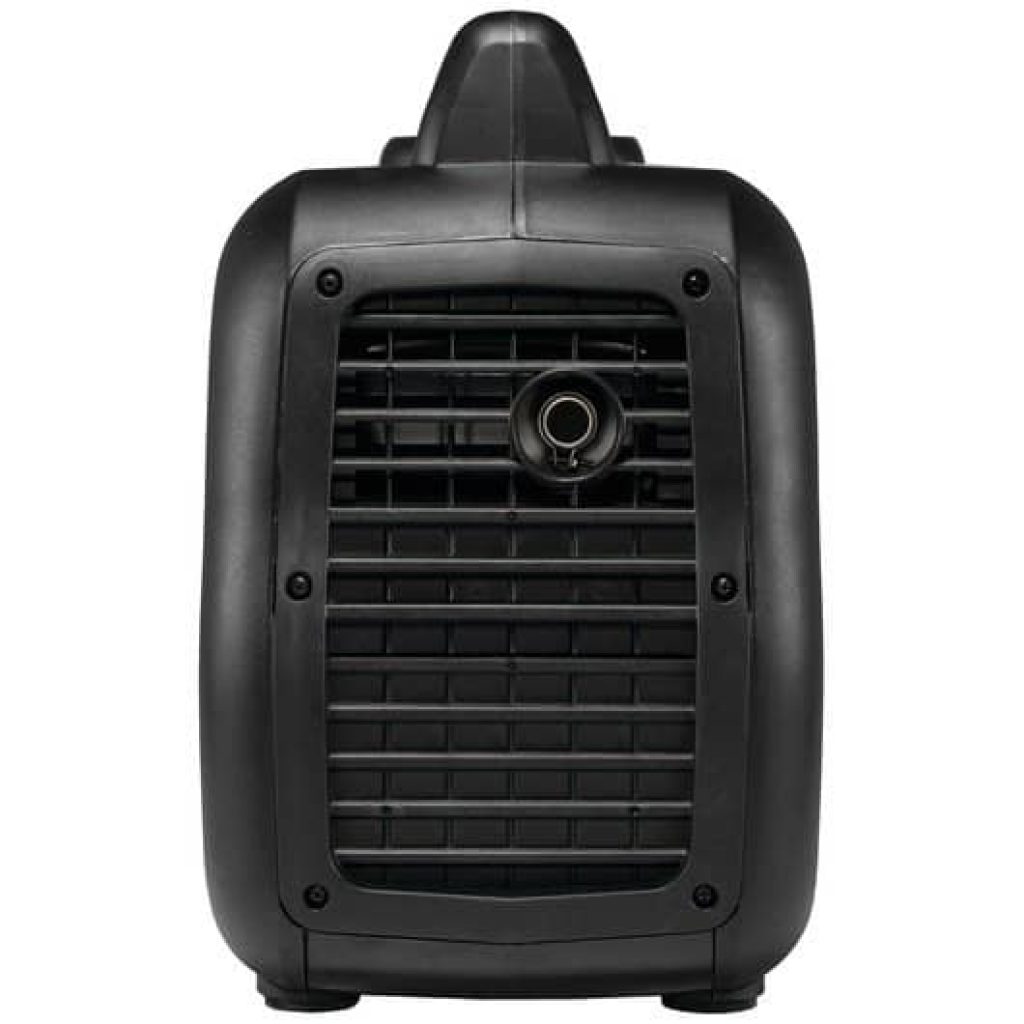
The DXGNi2200 is parallel capable, but the cable is sold separately. That means you can pair compatible units for more output, which is the route many RV owners consider when they want inverter power and a 30A-style setup.
Don’t build your entire buying plan around parallel use until you verify the DeWalt parallel kit is actually available. Stock on the generator itself has been in and out through 2026, and the parallel accessories can be spotty too.
If parallel operation is part of your plan, read our guide to parallel generators before you buy. The right cable, matching units, and outlet plan matter more than the word “parallel” on the spec sheet.
Pros and cons
Pros
The DXGNi2200’s biggest advantage is safety hardware. GFCI-protected 120V 20A outlets are rare on a suitcase inverter, and CO-Protect adds another layer for homeowners and RV owners who may not run generators every week.
It also brings clean inverter power under 3% THD, so it’s appropriate for laptops, phones, TVs, and chargers. The 3-year warranty helps its case against cheaper units that may win on sticker price but not on buyer confidence.
The 49 lb dry weight is still portable for a compact inverter, and the 1-gallon tank keeps the package manageable. Auto throttle helps stretch fuel at light loads and keeps the noise down when demand is low.
Cons
The 1,700 running watts are workable, but not generous. Honda gives you 1,800 running watts in the EU2200i, and Champion’s 200951 is rated at 1,850 running watts.
The 1-gallon tank is another compromise. It supports up to 11 hours at 25% load, but at about 50% load you’re closer to 6 hours, so heavier users should plan for refueling.
Stock and pricing are the other sore spots. GeneratorBible lists it at $699, street listings often land roughly $550-$700 when stocked, and some retailers list it above $900, so comparison shopping is mandatory.
It also does not give you a built-in 30A outlet. If that’s central to your RV setup, you’ll need to think carefully about parallel gear or step into a larger class.
Maintenance basics
The DXGNi2200 uses an 80cc 4-stroke engine, so basic maintenance matters just like it does on any small gas generator. Keep clean oil in it, don’t ignore low-oil shutdown, and don’t treat old fuel like it’s harmless.
For oil selection, start with the manual, then use our guide on what kind of oil a generator uses to understand viscosity and small-engine oil basics. A small inverter engine doesn’t hold a huge oil reserve, so neglect shows up fast.
Fuel care is just as important. The DXGNi2200’s small tank is handy, but stale fuel can still gum up the fuel system if the unit sits between outages or camping trips.
Our portable generator maintenance checklist covers the habits that keep machines like this ready: fresh fuel, periodic running, clean air intake, oil changes, and safe storage prep. A generator that won’t start during an outage is usually a maintenance story, not a wattage story.
Bottom line
Buy the DeWalt DXGNi2200 if you want a compact inverter with GFCI-protected outlets, CO-Protect, clean power, and a 3-year warranty at a mid-level price. It’s not the cheapest, quietest, or strongest 2,200W-class option, but it has the best safety-minded feature mix in this comparison.
Buy the Champion for value, the Honda for refinement and resale, and the DeWalt for the safer outlet panel without paying Honda money. For DeWalt-line context, the DXGNi2200 is current as of July 2026, while the larger DXGN6000 is the discontinued model we cover in our DeWalt DXGN6000 review.
Frequently asked questions
How many watts is the DeWalt DXGNi2200?
The DeWalt DXGNi2200 is rated for 2,200 starting watts and 1,700 running watts. It’s a 120V inverter generator, so it’s meant for smaller backup loads, RV basics, electronics, and light jobsite power.
Who makes the DeWalt DXGNi2200?
The DXGNi2200 is a DeWalt-branded portable inverter generator sold under DeWalt’s portable-power program. Its SKU is PMC172200. DeWalt lists the model, but the public spec sheets do not require naming a factory to understand the machine.
Is the DeWalt DXGNi2200 discontinued?
No. The DXGNi2200 / PMC172200 is still listed as current on DeWalt’s site as of July 2026. The discontinued DeWalt generator people often confuse it with is the larger DXGN6000.
How loud is the DeWalt DXGNi2200?
GeneratorBible lists the DeWalt DXGNi2200 at 60 dBA. That’s normal-conversation territory and quieter than open-frame generators, but it’s louder than the Honda EU2200i’s published 48-57 dBA range and the Champion 200951’s 53 dBA figure at 23 ft.
Does the DXGNi2200 have GFCI outlets and a CO sensor?
Yes. The DXGNi2200 has two duplex 120V 20A 5-20R GFCI-protected outlets and DeWalt’s CO-PROTECT carbon-monoxide shutdown system. That combination is the main reason this model stands out in the 2,200W suitcase inverter class.
Will the DeWalt DXGNi2200 run an RV air conditioner?
Not a 13.5k BTU RV air conditioner by itself. For that load, look at a proper parallel setup or move into the 3,000-4,500W class. The DXGNi2200 is better for battery charging, lights, TV, fans, and small appliances used carefully.
Is the DeWalt DXGNi2200 CARB compliant?
Yes. The DeWalt DXGNi2200 is CARB and EPA compliant, so it is a 50-state model. That matters if you’re buying in or traveling through states with stricter emissions rules.