If your generator won’t start after sitting for months, the overwhelmingly likely culprit is stale gasoline and a varnished carburetor, so the fix order starts with fuel. Honda’s fuel-storage guidance says fuel-related problems can show up in less than 30 days because gasoline starts oxidizing and deteriorating immediately in storage.
Work this list in order, cheapest and most likely first. Most portable generators that crank but won’t fire, or fire and die, are running again by fix #2 or #3 if the problem started during storage.
Why sitting kills generators
Gasoline doesn’t stay the same in a parked generator. Honda’s fuel-storage guidance says it starts oxidizing and deteriorating immediately, and that deteriorated fuel leaves sticky deposits that clog the small passages in the fuel system.
The carburetor bowl is where a lot of the trouble starts. As fuel evaporates, the heavier gum stays behind, and that varnish can clog the tiny fuel passages the engine needs at startup and idle.
Storage also exposes the simple stuff. Electric-start batteries self-discharge over months, spark plugs can foul or carbon up, air filters can clog, fuel lines can kink or crack, and a plugged tank-cap vent can starve the carburetor by vacuum-locking the tank.
That’s why the right driveway approach is not to start tearing the engine apart. Start with fuel, bowl drainage, oil level, controls, battery, plug, air, fuel path, and flooding before you assume anything major failed.
The 9 fixes, in order
1. Dump the stale gas and start with fresh, treated fuel. If you can’t remember when you filled the tank, treat that gas as old. Honda’s fuel-storage guidance says fuel problems can appear in less than 30 days, and Gold Eagle says untreated pump gas can start degrading in as little as 30 days. Drain the old fuel into an approved container, refill with fresh gas, and add stabilizer; STA-BIL’s published claim is treated fuel stays fresh up to 24 months at 1 oz per 2.5 gallons.
Check STA-BIL Storage stabilizer prices on Amazon →
Don’t try to “burn through” stale gas right before a storm. If the generator has already been sitting, old fuel can make the no-start worse by dragging more varnish into the carburetor. If you’re planning test runs and want to know how much fresh fuel to keep on hand, our guide to how much gasoline a generator uses will help you size the can without guessing.
2. Drain the carburetor bowl. Stale fuel in the tank is only half the problem; the carb bowl is where evaporated fuel leaves sticky varnish behind. Most carburetor bowls have a drain screw, so shut the fuel valve, place a small container under the bowl, open the drain, then let fresh fuel flow through after you reopen the valve. Honda’s owner’s-manual storage procedure says to drain the carburetor if you run the generator less than once a month, and carb cleaner through the bowl can help if it’s gummed up.
Shop carburetor cleaner on Amazon →
If the generator fires for a second and dies, this is still the first place to spend your time. That symptom often means the engine gets a quick taste of fuel but can’t pull steady fuel through the small carb passages. Don’t rebuild anything until you’ve at least drained the bowl and tried fresh, treated gasoline.
3. Check the oil on level ground. Champion’s help center says its engines have a low-oil sensor that prevents the engine from running when the crankcase is low. A generator parked on a slope can also fool the sensor, so move it to level ground, check the dipstick the way your manual specifies, and top up with the right oil. If you’re unsure what to pour in, use our generator oil guide before mixing random bottles from the garage.
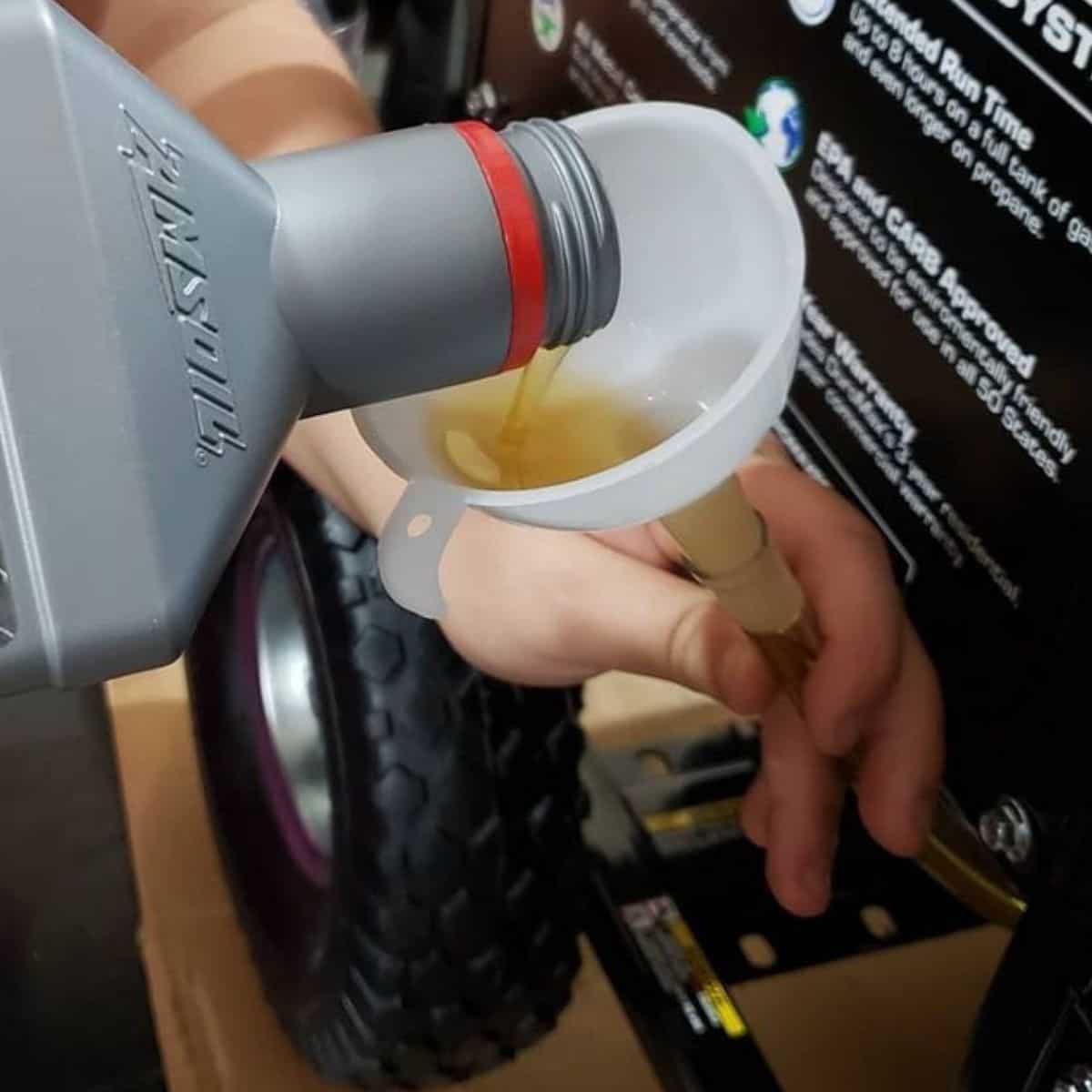
A low-oil shutdown can look exactly like a fuel problem from the handle end of the machine. The starter may crank, the engine may cough, and then it refuses to stay running. Fix the oil level before you keep pulling the rope or grinding the starter.
4. Put every control in the right position. Set the fuel valve to ON, the run/stop switch to RUN, and the choke closed for a cold start. Champion’s basic no-start checks include fresh fuel, correct oil level, fuel valve open, and choke in the right position. More “dead” generators die here than anyone admits, especially after someone else borrowed it or stored it with the controls in random positions.
After a few pulls or cranking attempts, adjust the choke as the engine tries to catch. Too little choke can make a cold engine refuse to fire. Too much choke after repeated attempts can flood it, which is why fix #9 is still on this list.
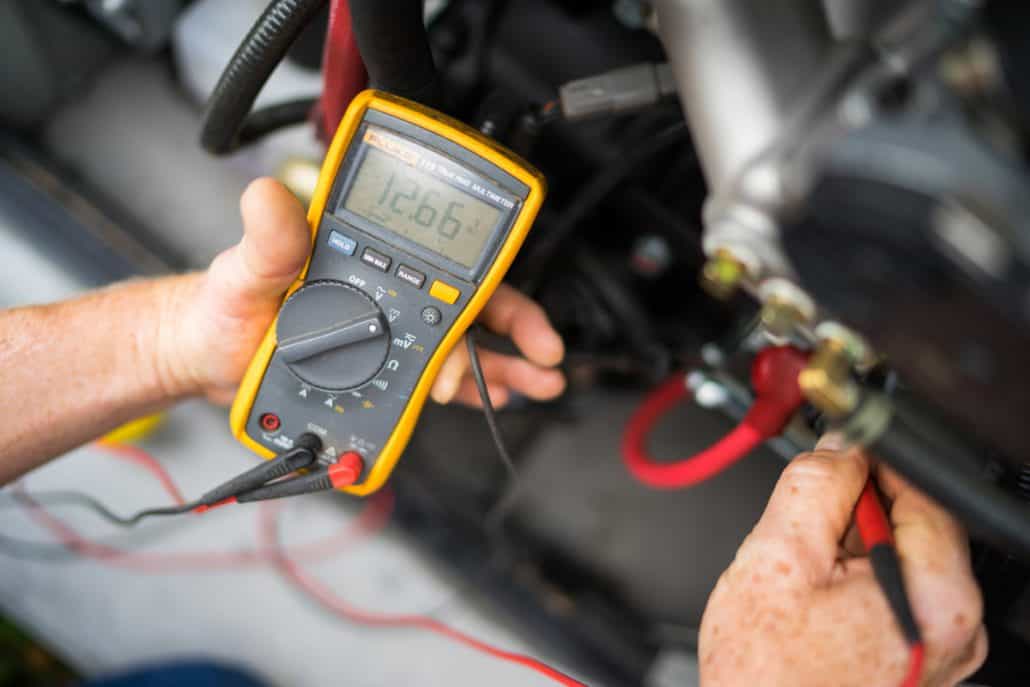
5. Charge or jump the electric-start battery. Electric-start batteries self-discharge over months of sitting, so a dead button does not mean the engine is dead. If your model has recoil start, use the pull cord as the test: if it starts by rope, the engine is fine and the battery side needs attention. Charge the battery, jump it only as the manual allows, and use a battery maintainer during storage to prevent the repeat.
Shop 12V battery maintainers on Amazon →
Don’t let a weak battery send you chasing carburetor parts too early. Slow cranking can make a good engine act like it has a fuel or spark problem. A strong pull on the recoil starter is the cleanest driveway cross-check on most portable units.
6. Pull and read the spark plug. A wet plug means the engine is flooded, while a black or crusty plug points to fouling or carbon buildup. Clean it if it’s serviceable, replace it if it’s cheap and suspect, and check the model’s manual for the gap spec instead of guessing. A fresh plug is one of the fastest ways to remove doubt from a no-start that still cranks normally.
Shop replacement generator spark plugs on Amazon →
Keep the plug wire clear while you inspect the plug, and don’t force threads back into the cylinder head. If the old plug smells strongly of gas, move to the flooded-engine procedure after drying or replacing it. If it’s dry after repeated cranking, go back to fuel delivery and carb bowl flow.
7. Swap or clean the air filter. A clogged air filter can mimic a fuel problem because the engine can’t breathe correctly. Remove the filter and inspect it for dirt, oil saturation, nests, or debris from storage. Clean or replace it according to the manual, then retry the start with the controls set correctly.
Don’t run the generator for real work with the filter removed. A quick inspection is fine, but the filter is there to keep grit out of the engine. If it crumbles, sheds material, or looks packed solid, replace it before the storm workload starts.
8. Chase the fuel path. If fresh fuel is in the tank and the bowl is drained but the engine still fires and dies, check the inline fuel filter, fuel lines, and tank-cap vent. A kinked or cracked line can starve the carburetor, and a plugged cap vent can vacuum-lock the tank so fuel stops flowing. Loosen the cap briefly as a diagnostic, then inspect the line path from tank to carburetor.
Fuel starvation often looks like the generator wants to run only for a moment. It may catch, surge, then die as the bowl empties faster than it refills. If you find brittle lines or a plugged filter, fix those before blaming the carburetor itself.
9. Clear a flooded engine. Repeated cold-start attempts with too much choke can soak the plug and cylinder with fuel. Remove the spark plug, crank briefly to clear the cylinder, dry or replace the plug, then reinstall it and restart without choke. If it now fires, you didn’t have a major failure; you had too much fuel and not enough air.
Flooding is more likely after someone keeps pulling, choking, and twisting controls in a panic. Slow down and reset the machine. Fresh fuel, the right oil level, the correct controls, and a dry plug give you the best restart chance.
Symptom shortcuts
| Symptom | Most likely cause | Start with fix # |
|---|---|---|
| Cranks, no fire | Stale fuel or varnished carburetor | #1-2 |
| Fires then dies | Gummed jets or starved fuel path | #2, #8 |
| Won’t crank at all with electric start | Dead battery | #5 |
| Runs only on choke | Partially clogged carburetor | #2 |
| Smells like gas, won’t fire | Flooded engine | #9 |
| Runs on propane, not gas on a dual-fuel unit | Gas side gummed up | #1-2 |
Use the table as a shortcut, not a license to skip the basics. A generator can have more than one storage problem at the same time, especially stale fuel plus a weak battery or stale fuel plus low oil.
If the engine runs on propane but not gasoline, the engine itself is probably capable of running. Dual-fuel units that sat with gasoline still gum up, but starting them on propane sidesteps stale-gas symptoms entirely and is a useful diagnostic.
What a no-start is not
A no-start after storage is almost never proof that “the generator is just old.” Coils and magnetos rarely die while sitting on a shelf. Fuel, oil level, controls, battery charge, plug condition, airflow, and fuel delivery are much more likely to be the problem.
Don’t tear into a rebuild before you’ve done fixes #1-2. A varnished carb bowl can make a healthy engine act dead, and stale gas can create the exact symptoms people mistake for ignition failure.
Don’t buy a new generator over a bowl of bad gas, either. But if the storm is 24 hours out and fixes #1-6 haven’t worked, the repair clock may have beaten the wrenching clock. At that point, borrowing, renting, or buying from our hurricane generator guide beats losing the food in the fridge while you keep guessing.
The practical cutoff is simple: if you’ve confirmed fresh fuel, a drained bowl, correct oil level, proper controls, a charged battery or good recoil start, and a usable plug, then the easy driveway wins are mostly gone. You can still chase filters, lines, vents, and flooding, but don’t let pride run out the clock.
Keep it start-ready between storms
The best storm repair is the one you don’t have to do. Run the generator monthly for 20-30 minutes under load, keep stabilizer in every gas can, and don’t leave untreated fuel sitting in the carburetor between seasons.
Honda’s owner’s-manual storage procedure says to drain the carburetor if you run the generator less than once a month. For storage over a year, Honda says to drain the tank and carburetor. That one habit prevents a lot of pre-storm driveway carb work.
Stabilizer helps, but it doesn’t excuse neglect. STA-BIL’s published claim is up to 24 months at 1 oz per 2.5 gallons, while untreated pump gas can start degrading in as little as 30 days per Gold Eagle. Date your cans so you’re not trying to remember during a warning cone.
Use a written schedule instead of memory. Our portable generator maintenance hub covers the recurring checks, and the hurricane generator checklist puts “start the generator a week out” where it belongs: at the top of the storm prep list.
Off-season storage needs the same discipline. If the machine is going away for months, follow our generator winterizing guide and leave it ready for the next outage instead of hoping it starts.
Dual-fuel owners get one extra diagnostic tool. If gasoline storage has you stuck, starting on propane can bypass stale-gas symptoms and help confirm the trouble is on the gasoline side, not the engine itself.
Bottom line
Fresh, treated fuel plus a drained carburetor bowl fixes the most common “generator won’t start after sitting” failures. Correct oil level, proper control positions, a charged battery, and a clean plug catch most of the rest.
Stop wrenching and go to a shop when spark, fuel, and compression basics are all confirmed and it still won’t fire. If the storm window is closing, secure backup power first and repair the generator after the pressure is off.
Frequently asked questions
Why won’t my generator start after sitting?
The dominant cause is stale fuel and a varnished carburetor. Honda’s fuel-storage guidance says fuel-related problems can appear in less than 30 days because gasoline deteriorates and leaves sticky deposits that clog small fuel passages.
How long can gas sit in a generator before it goes bad?
Honda’s guidance says fuel problems can show up in less than 30 days. STA-BIL’s published claim is that treated fuel stays fresh up to 24 months at 1 oz per 2.5 gallons.
Will a generator start with old gas in it?
Sometimes, but it’s not worth betting a storm outage on it. Old gas can gum the carburetor worse, so draining it and refilling with fresh, treated fuel is cheap insurance.
Can low oil stop a generator from starting?
Yes. Champion’s help center says its low-oil sensor prevents the engine from running when the crankcase is low, and a generator parked on a slope can fool the sensor. Check oil on level ground.
Do I need to drain the carburetor for storage?
Honda’s owner’s-manual storage procedure says to drain the carburetor if you run the generator less than once a month. For storage over a year, Honda says to drain the tank and carburetor.
When should I give up and take it to a shop?
Stop after you’ve verified fresh fuel, a clean bowl, oil level, controls, battery, plug, filter, and fuel path and it still won’t fire. Also stop if the storm clock beats the repair clock; backup power matters more than winning the driveway repair.