
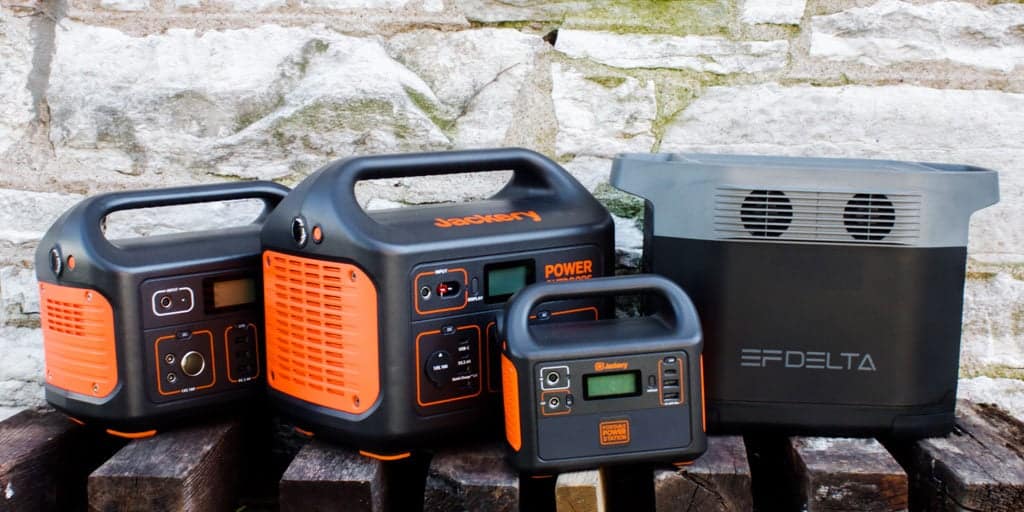
The Anker SOLIX C1000 is the best all-around portable power station in 2026: 1,056 Wh, 1,800W AC output, 28.7 lb, and a 58-minute full wall recharge per Anker’s published specs. The Jackery Explorer 1000 v2 is the value pick, the EcoFlow DELTA 3 Classic is the fast-charge and UPS pick, and the Bluetti Elite 200 V2 is the capacity pick.
This page has been rebuilt around current LiFePO4 models with production verified in July 2026. The old picks were mostly 2019-era NMC stations, and most are discontinued or effectively unsupported in the U.S. market now.
Best portable power stations compared
| Model | Capacity | AC output | Weight | Recharge | Cycle rating |
|---|---|---|---|---|---|
| Anker SOLIX C1000 | 1,056 Wh | 1,800W AC, 2,400W SurgePad | 28.7 lb | 58-minute full AC recharge; 80% in 43 minutes | 3,000 cycles to 80%; 10-year design life per Anker |
| Jackery Explorer 1000 v2 | 1,070 Wh | 1,500W AC, 3,000W surge | 24 lb | 1-hour full AC charge in emergency-charge mode | 4,000 cycles; 5-year warranty |
| EcoFlow DELTA 3 Classic | 1,024 Wh | 1,800W AC, 3,600W surge | About 27 lb per EcoFlow’s listing | 0-80% in 45 minutes with X-Stream AC charging | LiFePO4; 10+-year daily-use rating per EcoFlow |
| Bluetti Elite 200 V2 | 2,073.6 Wh | 2,600W AC, 3,900W power-lifting mode | 53.4 lb | 0-80% in 50 minutes | 6,000+ cycles to 80%; 17-year design-life claim per Bluetti |
| Jackery Explorer 240 v2 | 256 Wh | 300W AC | 7.7 lb | 2-hour AC recharge; 1 hour in app-activated fast mode | 3,000 cycles |
| EcoFlow RIVER 3 | 245 Wh | 300W AC, X-Boost 600W for resistive loads | 7.8 lb | 0-100% in 60 minutes | LiFePO4; 3,000 cycles to 80% |
| Goal Zero Yeti 1000 Core | 983 Wh | 1,200W AC, 2,400W surge | About 32 lb | — | NMC chemistry; 500 cycles to 80% per Goal Zero |
Anker SOLIX C1000: best overall portable power station
The Anker SOLIX C1000 is the cleanest all-around pick because it balances real capacity, strong inverter output, fast charging, and manageable weight. Per Anker’s spec sheet, it gives you 1,056 Wh, 1,800W AC output, 2,400W SurgePad output, and an AC recharge time of 58 minutes.
That puts it in the sweet spot for home backup, RV use, and a quiet campsite. It’s heavy enough at 28.7 lb that you won’t mistake it for a lunchbox, but it’s still portable compared with larger battery boxes.
The C1000 also has 600W max solar input, which Anker says can bring it back in about 1.8 hr under the right panel and sun conditions. The under-20 ms UPS switchover and 11 ports make it useful behind a modem, router, small office setup, or medical device that can tolerate that transfer time.
Anker rates the battery at 3,000 cycles to 80% and claims a 10-year design life. That’s exactly why LiFePO4 has replaced the old NMC power stations for buyers who plan to keep a unit for years.
Check the Anker SOLIX C1000 price on Amazon →
Jackery Explorer 1000 v2: best value 1-kWh power station
The Jackery Explorer 1000 v2 is the best value pick in this group because it slightly edges the Anker on capacity while coming in lighter. Jackery lists it at 1,070 Wh, 1,500W AC output, 3,000W surge, and 24 lb.
The key tradeoff is inverter size. The Jackery’s 1,500W continuous AC output is plenty for laptops, fans, CPAP machines, small kitchen loads, and many RV accessories, but the Anker and EcoFlow both publish 1,800W continuous ratings.
Jackery’s emergency-charge mode gives it a 1-hour full AC charge, which is fast enough to matter during a rolling outage. The dual 100W USB-C ports are also handy if you run modern laptops or tablets without dragging out AC bricks.
The other strong spec is longevity. Jackery publishes a 4,000-cycle rating and a 5-year warranty for the Explorer 1000 v2, so this is not the same chemistry story as the old Explorer 240 generation.
Check the Jackery Explorer 1000 v2 price on Amazon →
EcoFlow DELTA 3 Classic: fastest charging and best UPS
The EcoFlow DELTA 3 Classic is the pick if fast wall charging and UPS behavior matter most. EcoFlow lists it at 1,024 Wh, 1,800W AC output, 3,600W surge, and about 27 lb.
Its standout number is the under-10ms UPS switchover. That makes it genuinely usable as a desktop UPS for many computer setups, while the Anker and RIVER 3 sit at under-20 ms.
The charging spec is just as strong. EcoFlow’s X-Stream AC charging takes the DELTA 3 Classic from 0-80% in 45 minutes, which is the kind of speed that lets you top off between storm bands or before leaving for a campsite.
You also get a 100W USB-C port for direct laptop charging. If you want a power station that can sit under a desk most days, then ride along for backup power on weekends, this is the most UPS-focused choice here.
Check the EcoFlow DELTA 3 Classic price on Amazon →
Bluetti Elite 200 V2: biggest capacity pick
The Bluetti Elite 200 V2 is the big-capacity pick here, with 2,073.6 Wh and a 2,600W AC inverter. It’s the unit to buy if your load list is too large for a 1-kWh box.
Bluetti’s published specs also list a 3,900W power-lifting mode, but treat that for what it is. These modes help with resistive loads, not hard motor starts that need a true surge from the inverter.
The tradeoff is weight. At 53.4 lb, the Elite 200 V2 is portable in the “carry it from the garage to the living room” sense, not the “walk it down a trail” sense.
The payoff is battery life. Bluetti claims 6,000+ cycles to 80%, which is double the cycle rating of many rivals in this class, plus a 17-year design-life claim. It also recharges from 0-80% in 50 minutes from AC power, so the large battery doesn’t mean all-day wall charging.
Check the Bluetti Elite 200 V2 price on Amazon →
Jackery Explorer 240 v2: most portable power station
The Jackery Explorer 240 v2 is the small one to grab for phones, tablets, lights, cameras, and short laptop use. Jackery lists it at 256 Wh, 300W AC output, and 7.7 lb.
This is the replacement for the original Explorer 240, but it’s not just a cosmetic update. The big change is LiFePO4 chemistry, with Jackery publishing a 3,000-cycle rating for the 240 v2.
The port mix is modern for a compact unit. You get 100W USB-C, 15W USB-C, USB-A, and AC output, so it can handle small electronics without wasting as much power through a wall adapter.
AC recharge takes 2 hr, or 1 hour in app-activated fast mode. That makes it a good emergency drawer battery, but it’s not the right size for overnight fridge duty or running several larger loads at once.
Check the Jackery Explorer 240 v2 price on Amazon →
EcoFlow RIVER 3: budget mini with UPS
The EcoFlow RIVER 3 is the budget mini pick if you want a compact LiFePO4 station with UPS capability. EcoFlow lists it at 245 Wh, 300W AC output, and 7.8 lb.
The under-20ms UPS switchover is the feature that separates it from many small battery packs. It can keep a router, modem, or light office load covered through short outages, assuming the connected gear is comfortable with that transfer time.
EcoFlow also says the RIVER 3 charges from 0-100% in 60 minutes from AC power. That’s quick enough that you can keep it topped off without planning your day around it.
Its X-Boost 600W mode is for resistive loads, not motor starts. Use that feature with the right expectations, and this is a strong little station for apartments, work-from-home backup, and car camping where silent power matters.
Check the EcoFlow RIVER 3 price on Amazon →
Goal Zero Yeti 1000 Core: campground crossover pick
The Goal Zero Yeti 1000 Core is the campground crossover pick because it brings silent power where generators are banned. Goal Zero lists it at 983 Wh, 1,200W AC output, 2,400W surge, and about 32 lb.
That capacity is enough for the usual camping electronics, small fans, lights, camera batteries, and a reasonable overnight medical-device load. It’s also a better neighbor than a running engine at a campground with quiet hours.
One honest chemistry note: unlike the LiFePO4 picks above, the Yeti 1000 Core uses the older NMC cell chemistry, which Goal Zero rates at 500 cycles to 80%. For occasional campground and outage duty that’s fine; for daily cycling, the LiFePO4 units above are the better long-haul buys.
The Yeti 1000 Core is not the strongest inverter on this page. If you need 1,800W continuous output, look at the Anker or EcoFlow instead; if you need more watt-hours, look at the Bluetti.
Still, Goal Zero remains a familiar name for outdoor power, and this model fits the same quiet-campground job covered in our camping generator guide. If your campsite bans gas generators, a Yeti-style station is often the easier answer.
Check the Goal Zero Yeti 1000 Core price on Amazon →
What happened to this page’s old picks
The old version of this article covered popular 2019-era portable power stations, but that market has been cleaned out hard. NMC batteries, lower cycle ratings, slower charging, and brand support problems make most of those old picks poor buys now unless you understand exactly what you’re buying.
EcoFlow retired the River 370 generations ago; the RIVER 3 is the current entry line. Goal Zero’s Yeti 400 Lithium is long discontinued; the Yeti Core and PRO lines replaced it.
The original Jackery Explorer 240 was superseded by the 240 v2, which uses LiFePO4 instead of the old NMC chemistry. The original still shows up in remaining-stock listings.
Rockpals, ENKEEO, Imuto, SUAOKI, and SereneLife have effectively vanished from the U.S. power-station market. Treat any remaining listings as end-of-line units with unknown support.
The original Explorer 240 still floats around at closeout prices, but it uses the old NMC chemistry and should not be confused with the LiFePO4 Explorer 240 v2.
Check remaining original Explorer 240 stock on Amazon →
How many watt-hours do you actually need
Watt-hours are the tank size. Watts are how fast you drain the tank, and the AC inverter rating tells you how large a load the station can run continuously.
Use simple math before you shop. A typical phone charge is about 15 Wh, and a typical laptop charge is about 60 Wh, so you divide the station’s usable capacity by the loads you expect to run.
For overnight loads, the math gets clearer. A typical 60W fan for 8 hr uses 480 Wh, because 480 Wh ÷ 60W = 8 hr. A CPAP drawing 40W for 8 hr uses 320 Wh, because 320 Wh ÷ 40W = 8 hr.
A refrigerator is a different animal. If the compressor averages 150W over a day, that’s 3,600 Wh. That is why a 1-kWh station can cover a night of CPAP, phones, and a fan, but real fridge backup wants 2 kWh and up or meaningful solar input.
If you’re building a full load list, use our generator wattage calculator the same way you would for a gas generator. List the loads, separate running watts from startup surge, then choose the tool that fits the job.
LiFePO4, surge modes, and UPS: the spec-sheet decoder
Every current pick on this page except the NMC-based Yeti 1000 Core uses LiFePO4 battery chemistry. That matters because LiFePO4 stations are commonly rated for 3,000-6,000 cycles, while the old NMC generation was roughly 500-800 cycles.
LiFePO4 is also more heat-stable chemically. That doesn’t mean you abuse it in a hot shed, but it does explain why the portable power station market moved away from the older chemistry.
Read inverter ratings carefully. The AC watt rating is continuous output, while surge is a short burst meant to help with startup loads that last seconds.
SurgePad, X-Boost, and power-lifting modes are not magic. They stretch resistive loads such as kettles and heaters, but they do not turn a small inverter into a motor-start monster.
UPS specs matter if you want the station between the wall and sensitive electronics. EcoFlow lists the DELTA 3 Classic at under-10ms switchover, while Anker lists the SOLIX C1000 at under-20 ms and EcoFlow lists the RIVER 3 at under-20ms.
For deeper help matching backup power to computers, routers, TVs, and chargers, see our guide to the best generators for electronics. The same rule applies here: clean power and correct sizing beat wishful thinking.
Air travel is the one place none of these models make sense. Per FAA rules, lithium batteries are capped at 100 Wh for carry-on without airline approval and 101-160 Wh with approval, so even the 256 Wh Jackery Explorer 240 v2 stays home.
Power station or gas generator?
A power station is the right choice for indoor-safe, silent, zero-CO power. It can sit beside a bed, desk, router, fridge, or campsite table without exhaust, fuel storage, oil changes, or engine noise.
The limit is watt-hours. Once the battery is empty, you need wall power, solar, a vehicle, or a generator to recharge it.
That’s why the honest outage setup is often a battery for overnight and indoor loads plus a small inverter generator for long outages. The battery handles CPAP machines, phones, routers, lights, and quiet hours; the generator handles recharge cycles and bigger daytime work. If storm outages are the main reason you’re shopping, our guide to the best solar generators for hurricane season works through that exact charge-spend-recharge plan.
If you want that engine side of the plan, start with our best inverter generators roundup. Inverter generators are the natural partner for power stations because they’re quieter and better suited to electronics than open-frame jobsite machines.
For parties and game-day use, a battery station can run small electronics silently, while a generator still makes sense for larger food and comfort loads. Our tailgating generator guide covers that split.
For whole-home planning, don’t confuse a portable station with standby backup. Our portable vs standby generator guide explains where battery boxes, portable generators, and permanent systems fit.
Bottom line
Buy the Anker SOLIX C1000 if you want the best all-around portable power station: 1,056 Wh, 1,800W AC output, fast charging, UPS capability, and a strong LiFePO4 cycle rating. Buy the Jackery Explorer 1000 v2 if value and low weight matter more, or the EcoFlow DELTA 3 Classic if UPS speed is your top priority.
Step up to the Bluetti Elite 200 V2 for serious watt-hour capacity. Pick the Jackery Explorer 240 v2 or EcoFlow RIVER 3 for small-device backup, and use the Goal Zero Yeti 1000 Core where campground-friendly silent power is the main job.
Frequently asked questions
What is the best portable power station in 2026?
The Anker SOLIX C1000 is the best all-around pick in this lineup. Per Anker’s published specs, it has 1,056 Wh, 1,800W AC output, 2,400W SurgePad output, 28.7 lb weight, and a 58-minute full AC recharge.
How many watt-hours do I need?
Add up the watt-hours your loads use. A typical 60W fan for 8 hr uses 480 Wh, and a CPAP drawing 40W for 8 hr uses 320 Wh. A 1-kWh station is a good size for overnight CPAP, phones, and a fan, while fridge backup usually needs 2 kWh and up or solar input.
Can a power station run a refrigerator?
Yes, but the math gets big fast. If a fridge compressor averages 150W over a day, that is 3,600 Wh. That means a 1-kWh station is not a real full-day fridge backup plan; look at 2 kWh and up, solar input, or a generator pairing.
Can you bring a power station on a plane?
No pick on this page qualifies for normal airline carry-on rules. Per FAA rules, lithium batteries are capped at 100 Wh without airline approval and 101-160 Wh with approval. Even the Jackery Explorer 240 v2 is 256 Wh, so it stays home.
How long do LiFePO4 power stations last?
The current LiFePO4 stations here are rated far beyond the old NMC generation. Anker lists the SOLIX C1000 at 3,000 cycles to 80%, Jackery lists the Explorer 1000 v2 at 4,000 cycles, and Bluetti claims 6,000+ cycles to 80% for the Elite 200 V2.
Can a power station replace a generator for outages?
It can replace a generator for indoor, silent, overnight loads, but not for unlimited runtime. Power stations have finite watt-hours, so long outages still require wall power, solar, car charging, or a generator to recharge. The best setup for many homes is a battery indoors plus a small inverter generator for extended outages.
Is it safe to use a power station indoors?
Yes. A power station has no engine, no exhaust, and zero carbon monoxide, which is the main reason to use one indoors. You still need to follow the manufacturer’s limits for heat, load, and charging.
What’s the difference between LiFePO4 and lithium-ion?
LiFePO4 is a type of lithium battery chemistry, but it is more heat-stable and longer-lived than the older NMC chemistry used in many early power stations. Current LiFePO4 picks here fall in the 3,000-6,000 cycle class, while the old NMC generation was roughly 500-800 cycles.


